
- 16 min read

What is social listening?
Think of it like this: you're standing in a massive, buzzing hall where thousands of conversations are happening at once. Some people are talking about your products, others are complaining about your competitors, and a whole bunch are just chatting about problems your business could solve.
Now, imagine you had a set of hyper-sensitive microphones that could filter out all the background noise and tune directly into the conversations that actually matter to you.

That, in a nutshell, is what social listening is. It’s not just about hearing your name mentioned; it’s about understanding the feeling, the context, and the real intent behind the words.
While old-school social media monitoring might tell you that your brand was mentioned 500 times today, social listening tells you why. And that's where the magic happens. It answers the critical questions that actually drive growth.
More Than Just Counting Mentions
Social listening takes you way beyond just collecting data and into the world of genuine strategic analysis. It’s all about helping you organise the endless online chatter into meaningful patterns you can act on.
This proactive approach allows you to uncover incredibly valuable information about things like:
- Customer Sentiment: How do people really feel about your latest feature launch? Are they excited, frustrated, or just indifferent?
- Unmet Needs: What pain points are customers repeatedly bringing up that your product could solve?
- Competitor Weaknesses: Where are your competitors dropping the ball and leaving their customers unhappy?
- Emerging Trends: What new topics or keywords are starting to gain traction in your industry?
By analysing the full picture, you turn raw, messy data into sharp, actionable intelligence. You stop reacting to yesterday's news and start anticipating what's next, giving you a serious advantage.
This shift is a game-changer for everything from getting ahead of customer support issues to spotting new market opportunities before they become obvious to everyone else.
Ultimately, social listening gives you a direct, unfiltered line to the authentic voice of your market. It empowers you to make decisions based on what people are actually saying and feeling, not just what you think they want.
How Social Listening Turns Mentions Into Insights

So, how does this all actually work? Think of it like a chef preparing a gourmet meal. The process starts with sourcing the best raw ingredients, moves on to skilfully preparing them, and finishes by plating a dish that’s both beautiful and insightful.
Social listening platforms like ForumScout follow a very similar three-stage journey. They take millions of scattered online mentions and transform them into clear, strategic insights for your business. It's a structured approach that ensures you're cutting through the noise to find the signals that truly matter.
Stage 1: Gathering The Raw Ingredients
First things first, you need data. Social listening tools act like expert foragers, crawling across a huge range of online sources to gather up every relevant conversation they can find. This isn't just about the big social networks; it's about the entire digital ecosystem where people talk.
Your tool will constantly scan sources like:
- Forums and Communities such as Reddit and Hacker News
- Social Media Platforms including X (formerly Twitter), LinkedIn, and Instagram
- News Outlets and industry-specific blogs
This constant sweep gathers every single mention of your brand, your competitors, or key topics. The result is a massive dataset of raw, unfiltered conversations—the fresh ingredients for your analysis.
Stage 2: The Analysis and Refinement Process
This is where the real cooking begins. Raw mentions are just noise until they're processed and organised. This is where advanced artificial intelligence steps in, acting like a master chef to enrich the raw data with layers of context and meaning.
This transformation is what makes social listening so powerful. For example, sentiment analysis automatically categorises each mention as positive, negative, or neutral. This helps you get a quick read on the overall mood surrounding a topic. You can learn more about mastering this in our complete guide to sentiment analysis for social media.
The real magic happens when you analyze qualitative data effectively. It's about spotting the patterns and feelings hidden within conversations that you’d otherwise completely miss.
Stage 3: Serving Up Actionable Insights
Finally, all this refined information is served up in a way you can actually use. Modern dashboards present these insights through clear visualisations, easy-to-read reports, and real-time alerts. This is the finished meal, ready to inform your next big strategic move.
This final stage is more critical than ever, especially in the UK where social media has exploded. Industry revenue is on track to hit £12.5 billion, and with 54.8 million active users, brands simply can't afford to have blind spots. Tools like ForumScout are essential for navigating this incredibly busy space.
Dashboards are designed to deliver strategic outputs like share-of-voice reports, trend analysis, and competitive intelligence, turning what was once chaotic data into your next game-winning play.
Putting Social Listening Into Action
Theory is one thing, but seeing real results is what counts. The whole idea of social listening clicks into place when you see how it actually drives business growth. It’s about cutting through the background noise of online chatter and finding clear, actionable opportunities.
Let’s explore three powerful ways you can put social listening to work, turning casual online conversations into measurable success for your brand.
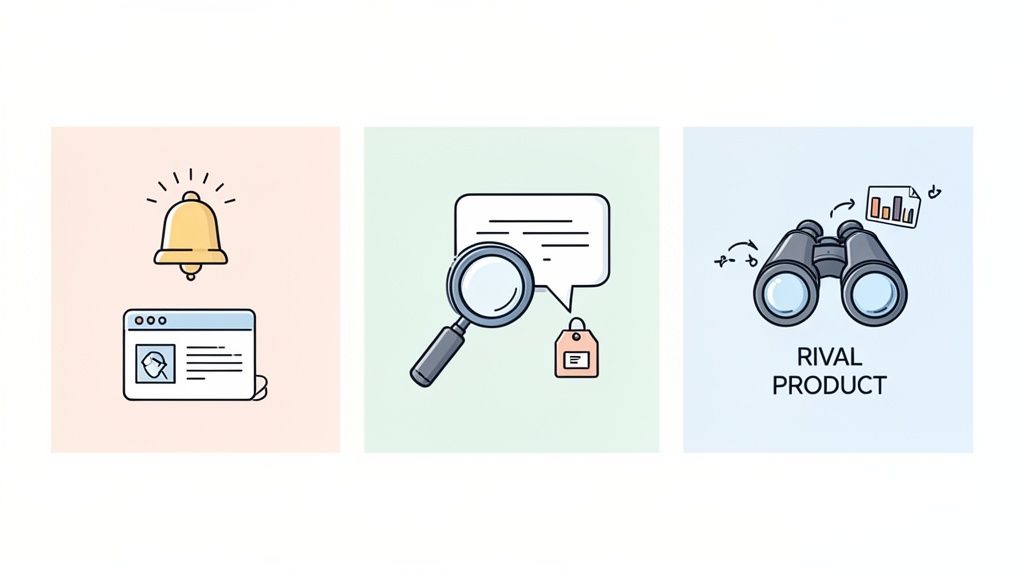
Proactive Brand And Reputation Management
Imagine a customer is frustrated with your product and posts a detailed complaint on a niche forum. Crucially, they don't tag your brand, so your standard social media monitoring tools miss it completely. But a social listening tool like ForumScout catches it instantly.
You get a real-time alert, letting your support team jump straight into the conversation to address the issue publicly and offer a fix. This quick, helpful response does far more than just solve one person's problem.
It hits three key goals: * Prevents Escalation: You’ve just neutralised a potential PR fire before it has a chance to spread across other platforms. * Builds Trust: The original poster feels heard, and every other person in that forum sees that your company genuinely cares. * Generates Positive Sentiment: You’ve flipped a negative situation into a public display of excellent customer service, making your brand look great.
Uncovering Hidden Sales Leads
Social listening is easily one of the best ways to find customers who are ready to buy. People signal their intent all the time without ever visiting a company’s website. They’ll ask for recommendations, complain about their current provider, or just talk about a problem they need to solve.
By setting up alerts for specific buying-intent keywords, you can tune into these conversations right as they happen. For example, a tool like ForumScout can track phrases such as: * "Anyone know a good alternative to [Competitor Name]?" * "Looking for a tool that can help me with [Problem You Solve]." * "Feeling frustrated with the limitations of [Competitor's Product]."
When you spot these posts, your sales team can step in authentically, offering genuine advice or a direct solution. This is miles more effective than cold outreach because you’re connecting with people at the exact moment they need you. To dig deeper, check out our guide on lead generation from social media.
Gaining A Competitive Intelligence Edge
What if you could learn from your rivals' mistakes and wins in real-time? Social listening lets you do just that, turning their public feedback into your private intelligence.
Monitor a competitor’s new product launch, and you'll get an unfiltered stream of feedback. Customers will openly discuss what they love, what they hate, and what features are missing.
This kind of information is a strategic goldmine. You can pinpoint common pain points that your product already solves, giving you a killer angle for your next marketing campaign. You can also spot feature gaps in their offering, which can help shape your own product roadmap. It’s all about turning their weaknesses into your strategic advantage.
Ultimately, these insights help you build proven strategies to increase social media engagement by giving you a much clearer picture of what your audience actually wants.
Building Your First Social Listening Strategy
Knowing about social listening is one thing, but actually putting it to work is where you find the real gold. Making that jump from theory to action can feel like a huge leap, but it really just breaks down into a few straightforward steps. You don't need a massive team or a bottomless budget to get started.
With a clear goal and a bit of structure, any business can start turning online chatter into a genuine source of strategic insight. This guide will walk you through the essential steps to get your first social listening programme off the ground, making sure your efforts are sharp and effective from day one.
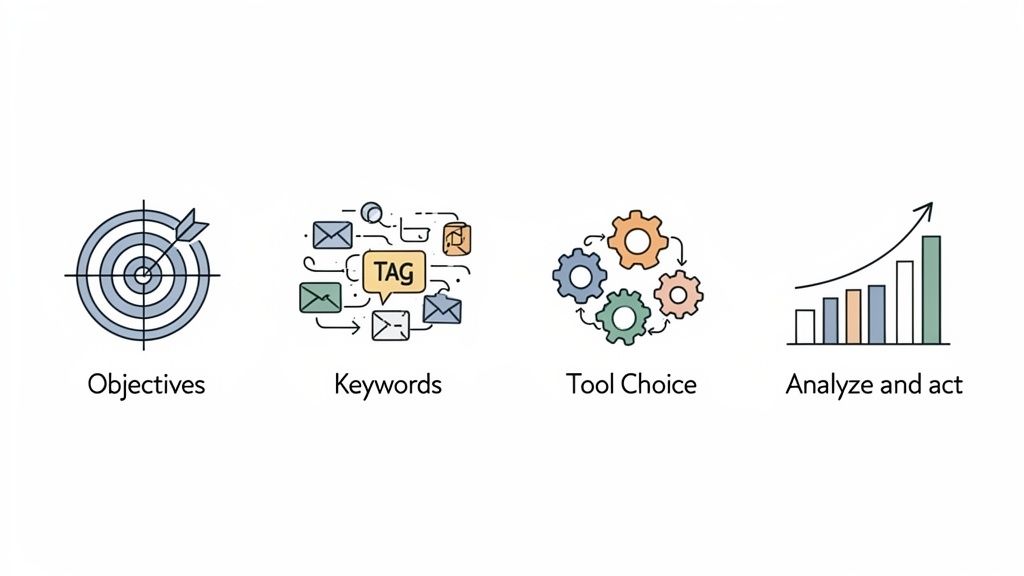
Step 1: Define Your Core Objective
Before you track a single mention, you absolutely have to know why you're listening. A vague goal like "see what people are saying" will only ever get you vague, unhelpful results. Instead, tie your strategy to a specific business outcome. This focus sharpens everything that follows, from the keywords you track to the tools you choose.
Start by asking what you really want to achieve. Are you aiming for:
- Brand Health Monitoring? Your goal is to keep an eye on brand sentiment, manage your reputation, and get ahead of any potential PR fires.
- Lead Generation? You’ll focus on spotting buying signals and jumping into conversations where potential customers are looking for exactly what you offer.
- Competitive Intelligence? The objective here is to analyse your competitors' strengths, weaknesses, and customer feedback to find your next big opportunity.
- Content and Product Ideas? You want to uncover customer pain points, feature requests, and emerging industry trends to guide your roadmap.
Pick just one primary objective to begin with. You can always broaden your scope later, but a tight focus ensures your first efforts deliver clear, measurable results and build momentum for the programme.
Step 2: Identify Your Keywords and Topics
Once your objective is set, it's time to brainstorm the exact words and phrases your tool will track. Think much bigger than just your brand name. A solid keyword list is the bedrock of effective social listening, making sure you catch the most relevant conversations while tuning out all the noise.
Try organising your list into a few key categories:
- Brand and Product Terms: This includes your company name, product names, common misspellings, and social media handles.
- Competitor Terms: Track your main rivals' brand names and products. It’s the perfect way to benchmark their performance and sentiment against your own.
- Industry and Topic Keywords: Monitor broader industry jargon, hot topics, and relevant hashtags to stay in the loop with your market.
- Problem-Based Keywords: Track phrases people use when they're describing a problem your product solves, like "how to manage X" or "alternative to Y."
Step 3: Choose The Right Tools
The right tool is your command centre, gathering and organising all this data for you. Platforms like ForumScout are built to make this process easy, offering powerful AI filtering and real-time alerts without the eye-watering price tag of traditional enterprise software. Your choice should always line up with your objective and your budget.
A critical mistake is investing in a tool that’s too complex or expensive for your current needs. The best platform is one that gives you actionable insights you can use immediately, not one that just drowns you in data you can't act on.
Step 4: Analyse and Act on The Insights
This is where the magic happens. Collecting data is passive; creating value is an active process. Honestly, social listening without action is just noise. The real return on your effort comes from turning what you find into real, tangible business improvements.
Set aside time to regularly review the conversations you’re tracking and ask what they mean for your business. If you spot a trend of negative sentiment around a new feature, pass that feedback directly to your product team. If you discover someone asking for a recommendation that fits your product, route it to your sales team as a lead.
The ultimate goal is to create a feedback loop where online insights consistently drive better decisions, happier customers, and a stronger bottom line.
How To Choose The Right Social Listening Tool
Picking a social listening tool can feel like a minefield, but it doesn't have to be a complicated or expensive decision. The right platform should give you clear insights, not just drown you in data or drain your bank account. Forget the clunky, overpriced legacy software—there’s exceptional value out there if you know where to look.
The market for these tools is booming. The UK social media listening market alone hit USD 0.5 billion recently and is expected to climb to USD 1.2 billion by 2030. That’s a huge jump, and it shows just how much British businesses are relying on tools to track conversations on Reddit, X, forums, and everywhere else in real-time. You can dig into the numbers and what this means for businesses in this detailed analysis of UK social media listening trends.
Identifying Non-Negotiable Features
When you're weighing up your options, focus on a handful of core features that actually give you a strategic edge. It’s easy to get distracted by flashy bells and whistles you’ll never use. A powerful, affordable tool should nail a few non-negotiables to make sure you get clean, actionable intelligence.
Here's what should be on your checklist:
- Comprehensive Platform Coverage: The best conversations often happen off the beaten path. Make sure your tool digs into forums like Reddit, news sites, and niche communities where your customers actually hang out.
- Intelligent AI Filtering: A raw count of mentions is just noise. You need a tool like ForumScout that uses AI to score every mention for relevance, so you only see the conversations that truly matter.
- Real-Time Alerts: Opportunities and crises don't wait. Your platform has to send you instant notifications so you can jump on leads, handle complaints, or engage with customers the moment they start talking.
Focusing on Scalability and Integration
The perfect social listening tool grows with you. It shouldn't lock you into a rigid, expensive contract that makes no sense for a scaling business. Instead, look for flexibility in both its pricing and what it can do. This way, you can start small and add more firepower as your needs change.
The goal isn't just another subscription; it's about integrating a central growth engine into your daily operations. A tool's true value is measured by how easily it connects insights to action.
Integrations are a massive part of this. A platform that hooks up with tools like Zapier or Make lets you automate your workflows. For example, you could automatically send new leads straight to your CRM or pipe customer feedback into your team’s chat channel. This turns listening data from a passive report into an active, revenue-driving asset.
If you're working with a tight budget, check out our guide to the best free social listening tools to get started without spending a penny.
Common Questions About Social Listening
Even when the concept of social listening clicks, a few practical questions always pop up. It’s one thing to get the theory, but quite another to see how it fits into your daily work—and your budget. Here, we'll tackle the most common queries with straightforward answers to help you move from theory to confident action.
We'll clear up any lingering confusion and get straight to the practical concerns that businesses, especially smaller ones, have when they're thinking about diving in.
How Is Social Listening Different From Social Media Monitoring?
Think of it like this: monitoring collects the dots, while listening connects them. They sound similar, but their purpose is worlds apart. It’s a crucial distinction that separates just gathering data from actually doing something smart with it.
- Social Media Monitoring (The 'What') is reactive. It's about counting brand mentions, tracking hashtags, and collecting posts where you've been tagged. Monitoring tells you that a customer complained on X. It’s the raw data.
- Social Listening (The 'Why') is proactive. It’s the strategy of analysing all that data to understand the story behind it. It uncovers the mood, trends, and motivations driving the conversation. Listening tells you why one hundred customers are complaining about the same thing and which product feature is broken.
Monitoring is about collecting the individual puzzle pieces. Social listening is about putting them together to see the bigger picture and figure out your next move.
Can Small Businesses Actually Afford Social Listening?
Yes, absolutely. The idea that social listening is some expensive luxury reserved for huge corporations is officially outdated. The days of enterprise-only pricing are long gone. Modern tools have made powerful listening capabilities accessible to everyone, levelling the playing field.
The rise of affordable platforms has democratised this technology. With flexible monthly plans and free trials now the norm, even solopreneurs, indie hackers, and small teams can access the same high-level insights as their bigger competitors. It’s no longer a question of budget, but of recognising how valuable it is to know what your customers and competitors are saying online.
What Is The Real ROI Of Social Listening?
The return on investment (ROI) from social listening is measured in opportunities you seize and crises you avoid. It’s not some abstract metric; it directly impacts your bottom line in very real ways.
The real value comes from turning insights into measurable outcomes—leads you wouldn't have found, problems you solved before they escalated, and brand equity you built by simply being present and responsive.
You can track the ROI through several key areas:
- Direct Lead Generation: Finding and converting people who are actively looking for a solution just like yours. That's direct ROI.
- Reduced Customer Churn: By spotting and fixing customer pain points early, you improve satisfaction and loyalty. Happy customers stick around.
- Crisis Aversion Cost Savings: Getting ahead of your reputation helps you sidestep the massive financial and brand damage that comes from a public relations disaster.
- Improved Product Development: Using real customer feedback to guide your roadmap stops you from wasting time and money building features nobody asked for.
By tracking metrics like lead conversion rates, customer lifetime value, and positive shifts in brand sentiment, you can draw a straight line from listening to business growth.
Ready to stop guessing and start listening? ForumScout gives you the tools to track every important conversation on Reddit, X, forums, and beyond. Find leads, monitor competitors, and manage your brand's reputation—all in one affordable platform. Start your free 7-day trial of ForumScout today and discover the insights you've been missing.