
- 23 min read
What Is Online Reputation Management?
Online reputation management, or ORM, is all about actively shaping how your business is seen across the internet. It’s the ongoing work of monitoring what people are saying, influencing the conversation, and making sure the story told about your brand online is the right one.
From customer reviews and social media chatter to news articles and what pops up on Google, ORM is about taking control of that narrative. In short, it’s making sure that when someone looks you up, they see the best and most accurate version of your company.
Shaping Your Digital First Impression
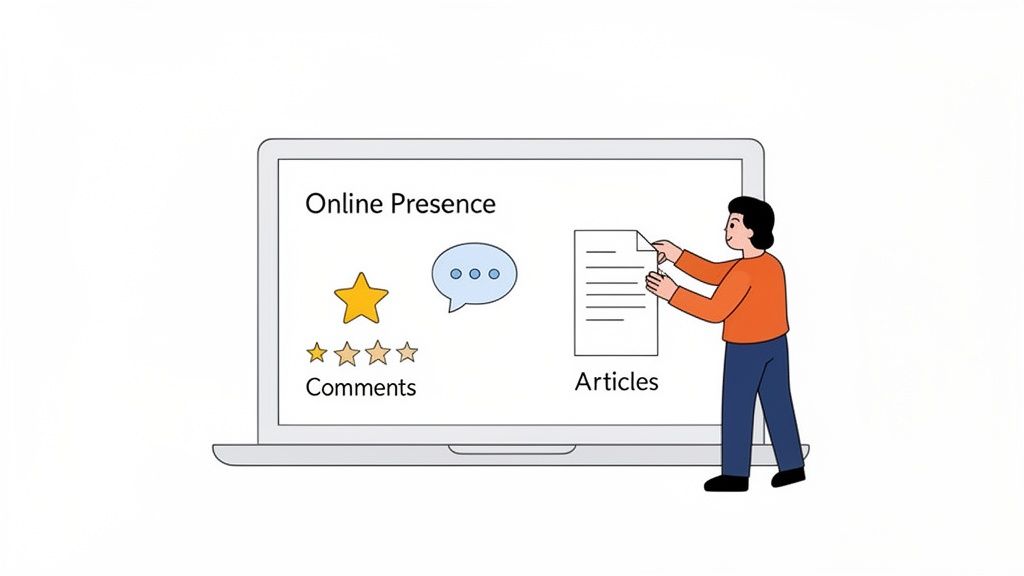
Think of your online reputation as your digital storefront. Every single review, comment, and article is part of the window display. For most people, this is the very first interaction they'll have with your business. It's a critical first impression, especially when you consider that most consumers trust online reviews just as much as a recommendation from a friend.
So what does online reputation management look like day-to-day? It’s far more than just a defensive game of putting out fires. A smart ORM strategy is proactive, built on several core activities that work together to build a positive and resilient brand image. It’s about writing your own story, rather than letting others define it for you.
The Core Components of Online Reputation Management
A solid ORM strategy doesn't happen by accident. It's built on a few key pillars that work together to protect and promote your brand online. Each component plays a specific role, from listening in on conversations to actively building a stronger presence.
The table below breaks down these essential pillars, explaining what each one is for and what activities are involved.
| Component | Primary Goal | Key Activities |
|---|---|---|
| Monitoring & Listening | To stay informed about what’s being said about your brand across the internet. | Tracking brand mentions, keywords, and competitor activity on social media, forums, review sites, and news outlets. |
| Responding & Engaging | To show customers you are listening and value their feedback. | Replying to positive and negative reviews, answering questions on social media, and participating in relevant online discussions. |
| Building & Promoting | To proactively create and amplify positive content that reflects your brand’s values. | Encouraging happy customers to leave reviews, publishing valuable blog posts, securing positive PR, and sharing user-generated content. |
| Repairing & Mitigating | To minimise the impact of negative content and protect your brand’s image. | Using SEO to push down negative search results, addressing false claims, and managing crisis communications. |
By mastering these areas, you create a complete cycle that not only defends your reputation but actively improves it over time.
Online reputation management is the art and science of creating a positive public perception of your business online. It’s about consistently monitoring and influencing how your brand is presented across the entire digital world.
It's Much More Than Just Damage Control
At the end of the day, ORM isn’t just about crisis management. It’s a continuous process of cultivating a healthy online ecosystem for your brand. When you consistently monitor conversations and engage with your audience authentically, you build deep-seated trust and loyalty.
This proactive approach means that if and when a problem does pop up, you’ve already built a strong foundation of positive sentiment to absorb the hit.
This mindset transforms ORM from a reactive chore into a strategic driver for growth. If you want to dive deeper into the specific steps for protecting your brand, it's worth checking out a practical guide on how to improve online reputation. By taking the reins of your digital narrative, you not only shield your business from harm but also unlock new opportunities for connection and growth.
Why Your Online Reputation Is a Core Business Asset
Let's move past the textbook definition. It's time to grasp why managing your online reputation is so ridiculously important. Stop thinking of it as just another marketing task. Your online reputation is a core business asset, as valuable as your intellectual property or the keys to your office. It's the invisible force that makes a potential customer click on your link instead of your competitor's.
Simply put, your online reputation is today's word-of-mouth, but on a global megaphone. Before the internet, one unhappy customer might tell ten friends. Now, they can tell ten thousand people in a single click with a review, a social media post, or a forum comment. This digital chatter is happening 24/7, whether you’re part of it or not.
The Straight Line Between Reputation and Revenue
Every star on a Google review, every comment on a Facebook page, every article that mentions your brand—it all adds up to a real-world financial impact. A solid, positive reputation works like a silent sales engine, constantly building trust and pulling in new customers. On the flip side, a negative or neglected reputation can quietly drain your revenue.
Think about these all-too-common scenarios:
- Higher Customer Acquisition Costs: A dodgy reputation means you have to spend more on ads just to convince sceptical customers. A great one, however, offers powerful social proof that does the selling for you.
- Increased Customer Churn: When your current customers see unresolved complaints online, their confidence wobbles. That makes them much more likely to jump ship to a competitor.
- Difficulty Attracting Talent: The best candidates absolutely research potential employers online. A company littered with negative employee reviews or public criticism will always struggle to hire top talent.
This isn't just theory; it’s the reality of how modern consumers make decisions. A staggering 85% of consumers trust online reviews as much as personal recommendations from friends, which makes your digital footprint one of the most powerful tools in your audience's decision-making process.
Building Trust in a Sceptical World
Trust is the currency of business today. Customers are smarter and more discerning than ever. Before they even think about buying, they actively hunt for proof that a brand is credible, reliable, and authentic. A well-managed online reputation delivers that proof in spades.
When you actively engage with feedback, share positive customer stories, and maintain a professional presence, you are not just managing perceptions—you are building a foundation of trust that fosters long-term customer loyalty.
This hands-on approach shows you actually care about your customers and stand behind what you sell. It transforms your brand from a faceless logo into a responsive, human partner, which is a massive competitive advantage. It's this realisation that has UK businesses pouring more resources into their digital image. A 2023 survey found that 57% of UK firms now put between 11-30% of their PR and marketing budgets towards ORM, and another 21% spend even more. You can read the full research on these brand reputation management trends to see just how serious this investment has become.
Your Reputation as a Strategic Advantage
Ultimately, investing in online reputation management is about future-proofing your business. A strong reputation acts as a protective shield. When a crisis eventually hits—and it will—a deep reservoir of goodwill can help you weather the storm. It also works like a magnet, attracting not just customers but also potential business partners, investors, and talented people who want to be associated with a brand that's respected.
By taking control of your online story, you shift from a defensive crouch to a strategic stance. You're no longer just reacting to what people are saying about you; you're actively shaping a reputation that fuels growth, builds unshakable loyalty, and becomes one of your company's most vital assets.
The Four Pillars of an Effective ORM Strategy
A solid Online Reputation Management (ORM) strategy isn’t a one-and-done task. It’s a continuous cycle built on four core pillars. Think of it like looking after a house. You need to inspect for issues (Monitor), fix problems as they pop up (Respond), add new, sturdy structures (Build), and handle major renovations when something serious goes wrong (Repair). Each pillar supports the others, creating a brand presence that can weather any storm.
This framework turns ORM from a reactive scramble into a structured, proactive process. It’s a clear roadmap for managing what people see, say, and feel about your brand online, making sure you’re always the one steering the conversation.
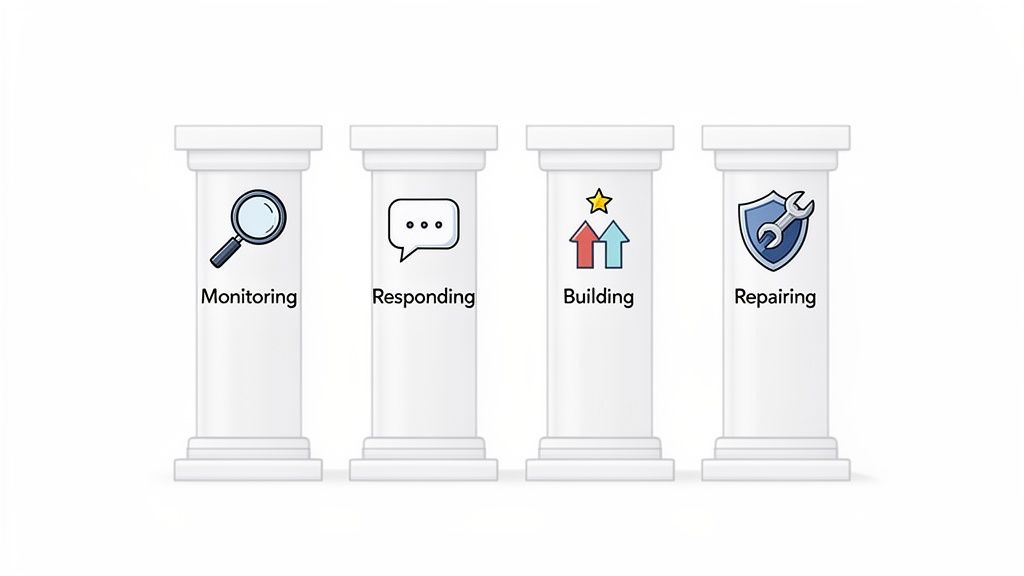
By making sense of all the digital chatter, you can more effectively listen, engage, and shape your brand’s story.
Pillar 1: Monitoring Your Digital Footprint
You can't manage what you don't measure. The first and most important pillar is monitoring—the simple act of listening to conversations about your brand, competitors, and industry across the internet. This is your early warning system. It helps you catch sparks before they turn into fires.
Proper monitoring goes way beyond setting up a few Google Alerts. It means tracking mentions across a huge range of platforms:
- Social Media: What are people saying on platforms like X (formerly Twitter), LinkedIn, and Instagram?
- Review Sites: How are customers rating you on Google, Trustpilot, or industry-specific sites?
- Forums and Communities: What are the discussions happening on Reddit, Quora, or niche forums in your sector?
This constant vigilance is exactly why the reputation monitoring market is booming. It's expected to grab 43.2% of the market share by 2025 as businesses realise how crucial it is to track mentions, manage sentiment, and get ahead of negative feedback.
Pillar 2: Responding with Purpose and Empathy
Once you’ve spotted a conversation, the next pillar is all about how you respond. The way you engage with feedback—good and bad—says everything about your brand’s character. A quick, professional, and understanding response can turn an unhappy customer into a loyal fan, while ignoring them just pours fuel on the fire.
Here are a few best practices for responding:
- Be Timely: Try to respond to all feedback within 24 hours. It shows you're listening and that you value what customers have to say.
- Stay Professional: Always keep a calm and respectful tone, even if you’re dealing with harsh criticism.
- Take it Offline: For tricky issues, offer to sort things out privately over email or a call. This protects the customer's privacy and helps de-escalate any public tension.
Responding isn’t just damage control; it’s about building relationships. Every single interaction is a chance to show you’re committed to customer happiness and to reinforce what your brand stands for.
Pillar 3: Proactively Building a Positive Narrative
The third pillar, building, is where you switch from defence to offence. This is all about proactively creating and sharing positive content that shapes the reputation you want to have. If you don't tell your own story, someone else will, and you probably won’t like their version.
Key activities for building a strong reputation include:
- Encouraging Reviews: Actively ask your happy customers to leave reviews on key platforms. This builds a powerful library of social proof that speaks for itself.
- Content Marketing: Publish valuable blog posts, case studies, and articles that establish your brand as an expert in your field.
- Digital PR: Get positive mentions in news articles, industry publications, and influential blogs to boost your credibility.
Public relations is a huge part of ORM. You can learn more about leveraging public relations for brand protection to really strengthen your positive brand narrative.
Pillar 4: Repairing and Mitigating Damage
Finally, the repairing pillar kicks in when significant negative content is threatening your reputation. Getting negative articles or reviews taken down is often incredibly difficult, so the main strategy here is suppression. The goal is simple: push the bad stuff off the first page of the search results, where hardly anyone will ever see it.
Repair tactics often involve advanced SEO techniques to create and promote a high volume of positive, brand-owned content. This new content eventually outranks the negative items, effectively burying them. This pillar requires a long-term commitment, but it's absolutely essential for recovering from a serious reputation crisis and rebuilding trust with your audience.
How Social Listening Tools Power Modern ORM
Trying to monitor your brand’s reputation manually is like trying to listen to a thousand conversations at once in a packed stadium. You might catch a word or two, but you’ll completely miss the bigger picture. This old-school approach isn’t just slow; it’s basically impossible in today's digital world. Technology is what elevates online reputation management (ORM) from a reactive chore into a powerful, strategic advantage.
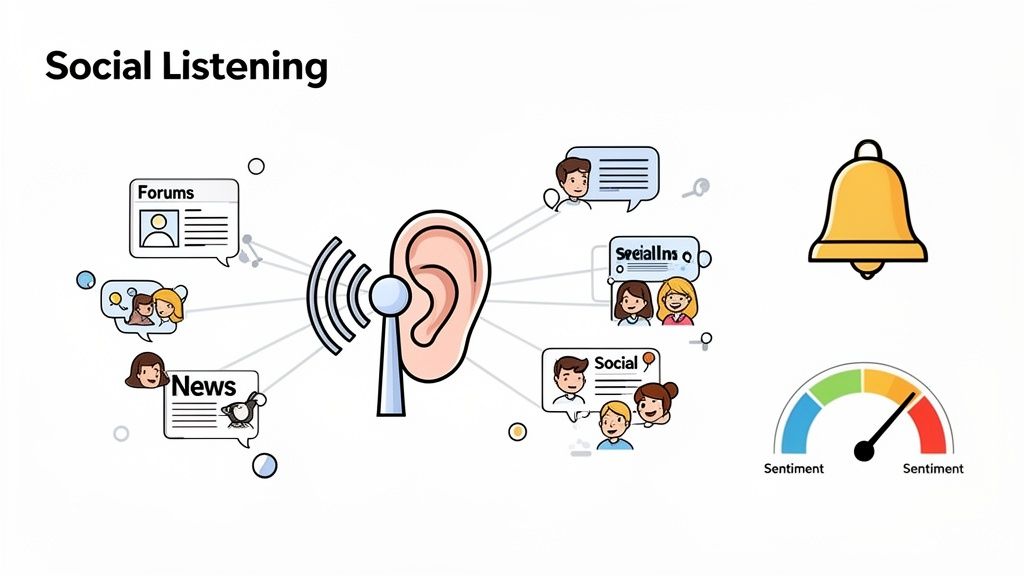
Social listening tools are the engine behind modern ORM. Think of them as your digital ears, constantly scanning the vast expanse of the internet for any mention of your brand, products, competitors, or key industry phrases. This isn't just for huge corporations anymore; tools like ForumScout make this level of intelligence accessible to businesses of all sizes, turning scattered online chatter into genuine insights you can act on.
From Manual Searches to Automated Intelligence
Before automation, ORM meant someone had to physically type keywords into search engines and social media platforms day after day. It was a slow, repetitive, and deeply flawed process that barely scratched the surface. Automated tools have completely changed the game, offering a continuous, bird's-eye view of your entire online presence.
The difference between the old way and the new is night and day. A quick comparison really shows just how much things have improved.
Manual Monitoring vs Automated Social Listening
| Feature | Manual Monitoring | Automated Social Listening (e.g., ForumScout) |
|---|---|---|
| Scope | Limited to a handful of known sites and search queries you can remember to check. | Scans millions of sources including Reddit, forums, news sites, and social media. |
| Speed | Slow and periodic. You often find conversations long after they’ve ended. | Gives you near-instant alerts and updates, letting you jump in while it matters. |
| Accuracy | Prone to human error, burnout, and completely overlooking nuanced discussions. | Uses AI to filter out the noise and deliver only the mentions that are truly relevant. |
| Insight | You get raw data and links, but very little context about what it all means. | Provides sentiment analysis, trend tracking, and competitive intelligence. |
This automated approach doesn't just save you a ton of time; it uncovers opportunities and threats you would never have found otherwise. It lets you move from just putting out fires to proactively engaging with your community and even spotting new leads.
Understanding Sentiment and Nuance
One of the most powerful features of modern social listening tools is AI-powered sentiment analysis. This tech goes way beyond just finding a keyword. It actually analyses the context of a mention to figure out if the feeling behind it is positive, negative, or neutral. For example, it can tell the difference between "I can't get enough of this product!" and "I've had enough of this product."
This level of insight is absolutely crucial. A sudden spike in negative sentiment can be the first warning sign of a product flaw or a brewing PR crisis, giving you a vital head start to get things under control.
By understanding the emotional tone behind online conversations, you gain a much deeper and more accurate picture of public perception. This allows you to tailor your responses with the right level of empathy and urgency.
Key Features That Drive Strategy
Modern ORM platforms are packed with features designed to give you strategic business intelligence. These tools are far more than just simple alert systems; they're a central hub for market research, customer service, and lead generation. When you're looking for a solution, a comprehensive reputation monitoring service should offer a robust set of features.
Here are the key capabilities you should look for:
- Real-Time Alerts: Get instant notifications when your brand is mentioned. This lets you engage in conversations as they happen, not days later when it's too late.
- Competitive Intelligence: Keep an eye on what people are saying about your competitors. This is gold for identifying their weaknesses, spotting gaps in the market, and learning from their wins and mistakes.
- Lead Generation: Find potential customers who are actively searching for solutions you offer or are venting their frustration with a competitor's product.
- Audience Insights: Discover where your target audience hangs out online, what topics they're passionate about, and who the real influencers are in your niche.
By using these features, you give your business the tools to not only protect its reputation but to actively use online conversations to fuel growth. Social listening turns the chaotic noise of the internet into a clear, strategic signal.
Measuring the Success of Your ORM Efforts
Effective online reputation management isn’t just about feeling good; it’s about driving measurable results that you can actually see. If you can’t measure your efforts, you can’t prove their value or figure out where to improve. It's crucial to move beyond vague feelings and focus on what truly shows a healthy, resilient online reputation.
This means zeroing in on key performance indicators (KPIs) that connect directly to your business goals. When you track the right data, you can show a tangible return on your ORM strategy, turning it from a simple cost into a clear driver of growth.
Core KPIs for Reputation Management
To get a clear picture of how your ORM is performing, you need to track a mix of metrics covering sentiment, visibility, and direct customer feedback. These KPIs give you a complete view of how your brand is seen online and where your strategy is making the biggest impact.
Here are the essential metrics to keep an eye on:
- Sentiment Score: This is the big one. It measures the overall emotional tone of conversations about your brand. Tools analyse mentions and flag them as positive, negative, or neutral, giving you a quick snapshot of public perception. A steadily rising sentiment score is a strong sign your efforts are paying off.
- Share of Voice (SOV): This metric calculates your brand’s visibility in online conversations compared to your competitors. A higher SOV means you’re dominating the discussion in your industry, which is exactly what you want from proactive reputation building.
- Average Star Ratings: On platforms like Google, Trustpilot, or industry-specific review sites, your average star rating is a direct and powerful indicator of customer satisfaction. Setting a goal to bump this rating up over time gives you a simple, clear benchmark for success.
Monitoring these metrics takes a systematic approach. While you can track star ratings by hand, calculating sentiment and SOV is nearly impossible without specialised tech. To learn more about the different platforms out there, check out our guide on the best online reputation management tools.
From Data to Actionable Insights
Tracking KPIs is only the first step. The real value comes from turning that data into strategic action. A sudden drop in sentiment, for example, isn't just a number—it’s an early warning that something is wrong. It prompts you to investigate a potential product issue or customer service failure before it blows up.
Think of your ORM metrics as a compass for your brand strategy. They don't just tell you where you are; they guide you on where you need to go next to build stronger customer relationships and protect your bottom line.
This data-driven approach is becoming more critical as online chatter increasingly shapes buying decisions. The demand has grown massively, with Google UK searches for 'online reputation management services' jumping to 6,600 in January 2022 from just 1,300 in 2019. This mirrors a wider trend where 72% of UK firms now monitor social media because they know online conversations directly hit sales. You can find more insights about these online review statistics and how they affect consumer behaviour.
Reporting and Demonstrating ROI
Finally, to get ongoing support and budget for your ORM work, you have to communicate its value effectively. Create regular reports that visualise the trends in your core KPIs over time. Connect improvements in metrics like average star ratings or positive sentiment to real business outcomes, such as a jump in website traffic, more lead conversions, or a drop in customer churn.
By linking your ORM efforts to these bottom-line results, you transform reputation management from an abstract idea into a proven business strategy. This shows stakeholders that investing in your brand’s online image isn't just a defensive move—it's a proactive investment in long-term growth and customer loyalty.
Online Reputation Management in Action
All this theory is great, but what does online reputation management actually look like day-to-day? To really get a feel for its impact, let’s move past the frameworks and dive into a couple of real-world scenarios. This is where you can see the direct line between a smart ORM strategy and genuine business results.
We'll walk through two classic examples. The first shows a business turning a potential disaster into a major win by handling negative feedback the right way. The second shows how proactively building a positive reputation from the get-go creates a powerful asset that drives growth.
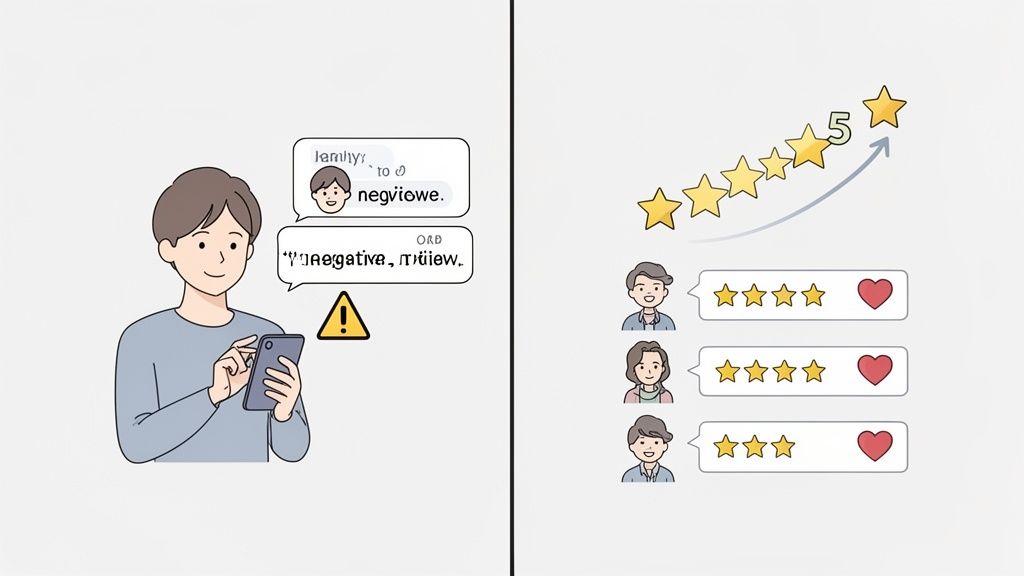
Scenario One: The Crisis Averted
Picture a small, independent coffee shop. One morning, they're suddenly hit with a wave of one-star Google reviews. Customers are all complaining about the same thing: a new barista who’s rude and painfully slow during the morning rush.
Without a plan, those reviews would just sit there, poisoning their local search results and sending would-be customers straight to the big chain coffee shop down the street.
But with an ORM strategy in place, the owner gets an immediate alert about the negative mentions. They roll out a simple, three-step response:
- Acknowledge and Apologise: The owner replies publicly to every single review. They apologise for the bad experience and own the fact that the service wasn't up to scratch.
- Take it Offline: In each reply, they provide a direct email address to discuss things further, along with an offer of a free coffee as a gesture of goodwill.
- Address the Root Cause: The owner has a chat with the new team member, giving them extra training and support to get their speed and customer service skills up to par.
The result? The public apology shows they're accountable, and the internal fix solves the actual problem. A few of the unhappy customers are so impressed with the follow-up that they even update their reviews, turning a negative into a powerful story about the shop’s commitment to its patrons. It's a masterclass in handling feedback, and you can learn more about crafting the perfect reply in this guide on how to respond to negative feedback.
A swift, empathetic, and transparent response does more than just damage control. It demonstrates that you are a business that listens, cares, and is willing to improve—qualities that build deep and lasting customer trust.
Scenario Two: The Proactive Builder
Now, let's look at an e-commerce brand that sells handmade leather goods. From day one, they decide to make reputation a core part of their marketing. They don't just wait for reviews to trickle in; they actively go out and cultivate them.
Here's what their strategy looks like:
- Automated Follow-Up: A week after every purchase, customers get a friendly, personalised email asking for their thoughts and including a direct link to the product's review page. No friction.
- Celebrating Customers: They constantly share positive reviews and user-generated photos on their social media, making their customers feel seen and valued.
- Building Community: They hang out in niche forums about leather crafting, offering genuine advice and building a name for quality without ever pushing a hard sell.
This proactive approach creates a powerful flywheel. The constant stream of positive reviews boosts their search engine rankings and gives new buyers the social proof they need to click "buy." Meanwhile, their community engagement cements their status as a trusted authority, building a loyal tribe of followers who defend and promote the brand all on their own.
Got Questions About ORM? We’ve Got Answers.
Jumping into online reputation management can feel a bit daunting, and it's completely normal to have questions. You might be wondering how long it all takes, what's actually possible, or if it's even the right move for your business. Let's clear up some of the most common queries we hear.
We've put together straightforward answers to help you get a solid grip on the fundamentals and move forward with confidence. The goal here is to cut through the jargon and give you practical insights you can actually use.
How Long Does It Take to Fix a Damaged Online Reputation?
Honestly, repairing a damaged reputation is a marathon, not a sprint. The timeline really depends on how deep the damage goes and how consistently you work at it. For smaller issues, like a few bad reviews, you could see a real difference in just a few weeks of focused effort.
But for the big stuff—like a viral negative news story or a nasty search result that just won't go away—you're likely looking at several months, or even up to a year. This isn't about a quick fix; it's a sustained campaign. You'll need to be creating positive content, optimising for search engines, and encouraging genuine reviews to build a new, positive story that eventually pushes the old one out of sight.
Key Takeaway: There's no magic wand for reputation repair. Success comes from consistent, strategic work over time, not a one-off campaign. Patience is your best friend here.
Can I Just Remove Negative Reviews or Articles About My Business?
Getting negative content taken down is incredibly tough. Unless it breaks a platform’s rules (think hate speech) or is legally defamatory, the platform probably won't remove it. This is where the core of what is online reputation management comes in: it’s less about removal and more about suppression.
The game plan is to create and promote a ton of high-quality, positive content that outranks the negative stuff. This means getting good press, publishing genuinely helpful blog posts, and generating authentic customer reviews. All this new content works to push the negative items off the first page of Google, which is critical when you remember that 92% of users never click past page one.
Is Online Reputation Management Only for Big Companies?
Not at all. In fact, you could argue it’s even more vital for small and medium-sized businesses. For a smaller company, a single bad review can do a disproportionate amount of damage to trust and sales. It used to be that only the big players could afford the fancy tools needed to keep an eye on everything.
That's all changed. Today, powerful and affordable tools have completely levelled the playing field. Businesses of any size can now tap into the same high-level monitoring and analysis that was once reserved for corporations. This makes proactive reputation management a smart, accessible strategy for everyone, from the local shop on the corner to a fast-growing startup.
Ready to take control of your online narrative? ForumScout gives you the tools to monitor conversations across Reddit, forums, and social media, so you can protect your brand and find new customers. Start your free 7-day trial and see what people are saying about you.