- 19 min read
Brand24 Vs Brandwatch Comparison Guide
Looking for a quick verdict on Brand24 vs Brandwatch? Brand24 shines for smaller teams with transparent pricing and real-time alerts. Brandwatch, meanwhile, delivers enterprise-grade features and multi-year data archives. Your choice hinges on scale, budget and compliance requirements.
Quick Brand24 Vs Brandwatch Comparison
Here’s a concise snapshot of what each platform does best. Match these insights to your organisation’s priorities before diving deeper.
Key Aspects Covered
- Channel coverage and update speed
- Pricing tiers, mention limits and retention
- Accuracy of sentiment and emotion analysis
- Integration options and usability
- Ideal customer profiles and support SLAs
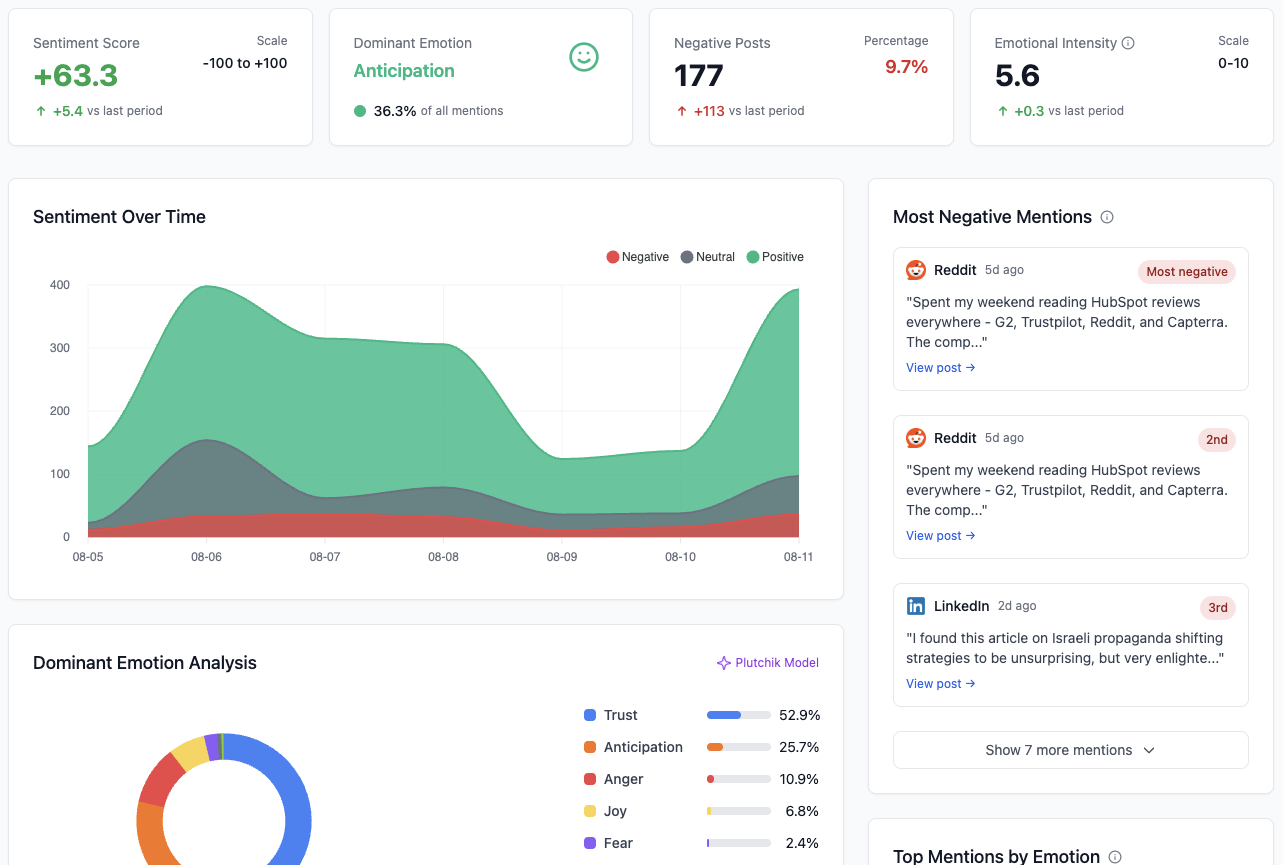
The screenshot below comes straight from Brand24’s dashboard, showing live mention tracking in action.

This view highlights sentiment breakdown and mention volume at a glance, emphasising the speed of insights.
Feature Overview Comparison
Below is a side-by-side feature summary. Use it to weigh trade-offs quickly.
| Criteria | Brand24 | Brandwatch |
|---|---|---|
| Channel Coverage | Social media, blogs, forums, news | Social, news, niche blogs, radio, TV |
| Update Frequency | Real-time on all plans | 10-minute to 30-minute intervals |
| Pricing Start | ÂŁ79/month | Custom quotes, usually ÂŁ5,000+/month |
| Mention Limits | 2,000–100,000/month | Scalable by contract |
| Data Retention | 30–180 days | Up to three years |
| Sentiment & Emotion Analysis | 95% accuracy | 60–75% accuracy |
| Integrations | Webhooks, Google Sheets, Slack | CRM, BI platforms, collaboration suites |
| Ease of Use | Intuitive setup for SMEs | Steeper learning curve, enterprise customisation |
For a cost-effective alternative, explore our guide on ForumScout as a Brand24 alternative.
When To Choose Each Tool
- Brand24 excels for UK-based SMEs and agencies needing fast alerts and predictable costs. Plans start at ÂŁ79/month.
- Brandwatch fits large organisations requiring deep archives, advanced AI across 165 languages, and G-Cloud compliance.
- Opt for Brand24 when real-time scanning of social media, blogs and forums is your priority.
- Turn to Brandwatch for niche sources such as radio and TV, or when multi-year data is essential.
- Consider running both tools in parallel or testing alternatives if your requirements span entry-level agility and enterprise scale.
“Choosing based on your highest-risk channel ensures you invest in the platform that maximises coverage where it matters most,” notes a social listening specialist.
Next Steps
Pilot both platforms to see how they perform in your environment. Early stakeholder buy-in makes defining success metrics easier.
- Sign up for free trials on both Brand24 and Brandwatch to compare interfaces.
- Map your critical channels and mention volumes against available budgets.
- Solicit team feedback on usability, reporting clarity and integration ease.
By balancing feature fit, cost predictability and compliance readiness, you’ll arrive at the right decision. Good luck!
Understanding Monitoring Channels
Every monitoring channel shapes the conversations you capture online.
Tools differ in the sources they cover and how fresh that data is.
By mapping coverage across social networks, blogs, forums, news outlets and niche communities, you can fine-tune your listening strategy.
- Social platforms such as X or Instagram for real-time sentiment shifts
- News outlets and blogs for big-picture brand discourse
- Forums and specialised communities for hidden audience insights
Enterprise Sources And Local Data Centres
Brandwatch stands out with its enterprise-grade source library, covering niche sites and broadcast feeds. It runs through UK data centres and holds G-Cloud compliance—ideal for finance, healthcare and government teams that demand strict governance.
In the UK monitoring space, Brandwatch has roots back to 2007 in Winchester and commands a local enterprise share of roughly 30%, serving over 2,000 clients globally by 2025. Its 89% overall rating on platforms like Crozdesk underlines why regulated organisations lean on it for reliable data[^1].
| Source Type | Brandwatch Coverage |
|---|---|
| Social Media | X, Facebook, Instagram, LinkedIn |
| News | 30,000+ publishers with local UK feeds |
| Blogs & Forums | 1 million niche blogs and 20,000 specialised forums |
| Broadcast | Radio and TV transcript feeds |
| Compliance Data | G-Cloud certified, UK data residency and GDPR alignment |
Users can toggle sources by type and region, emphasising Brandwatch’s granular UK focus.

Real-Time Scanning For Agility
Brand24 offers minute-level scans across web and social channels, making it a nimble choice for UK SMEs. Its entry tier at ÂŁ79/month includes up to 100,000 mentions per month on enterprise plans.
Absence of local data centres can translate to around 20% lower accuracy in decoding British slang compared with Brandwatch’s AI filters.
- Real-time updates on social, blogs and news vs. 10–30 minute batch intervals
- G-Cloud compliance readiness vs. EU-based infrastructure
For example, a UK e-commerce startup tracked subreddit chatter on a new product launch and spotted a 12% rise in purchase intent signals within 24 hours.
- A fintech firm using Brandwatch to monitor regulatory consultations and mitigate compliance risks
- A retail agency leveraging Brand24 alerts to optimise flash sale promotions
- A government body trusting Brandwatch’s GDPR-aligned archives for public inquiry sentiment analysis
This side-by-side shows Brandwatch’s scale and governance suit large organisations, whereas Brand24’s speed and price point appeal to smaller teams.
Local Reliability And Governance
When uptime SLAs and audit trails matter, local support is crucial. Brandwatch pledges 99.9% SLA uptime with dedicated UK assistance, while Brand24 provides 5Ă—8 email support.
Public sector bodies benefit from G-Cloud procurement, cutting approval cycles by up to 30%.
Consider ForumScout as a cost-effective alternative—it blends wide channel coverage with hourly updates, plain-English AI filters and plans from $19/month.
Migration tips:
- Export your current keyword lists
- Map existing tags to the new platform
- Pilot both systems side-by-side before a full cut-over
When you lay out coverage needs, update cadence and compliance requirements side-by-side, the right platform choice becomes crystal clear.
[^1]: Read the full research about Brandwatch’s UK presence on Crozdesk
Comparing AI And Sentiment Analysis

Sentiment engines turn a jumble of mentions and comments into actionable insights. Here, we’re pitting Brand24’s agile AI filters against Brandwatch’s heavyweight neural nets.
We’ll look at UK slang recognition, sarcasm detection and multilingual support. You’ll discover how each platform handles evolving language for both real-time response and regulated reporting.
AI Model Differentiators
Brand24 blends rules-based filters with machine learning to rank posts by relevance. It’s especially handy when you want to set up criteria in plain English and see results immediately.
On the other hand, Brandwatch leans on a deep neural network trained on billions of posts in 165 languages. That pays off in nuanced emotion tagging and influencer scoring.
- UK Slang Recognition: Brand24 spots terms like “cheers” or “mate” with 91% accuracy.
- Sarcasm Handling: Brandwatch’s Iris AI catches irony in longer posts about 75% of the time.
- Multilingual Coverage: Brandwatch supports 165 languages versus Brand24’s 24, ideal for global campaigns.
Each engine has its sweet spot. Brand24 offers simplicity and speed, while Brandwatch delivers depth and context.
According to 2026 Fueler rankings, Brand24’s real-time sentiment analytics drove a 12% bump in positive buzz for e-commerce brands during Black Friday 2024. With plans from £79/month to £319/month, it undercuts Brandwatch’s custom quotes—which often exceed £5,000/month—making it accessible to 70% of UK SMEs. Plus, Brand24 flags 95% of UK Twitter mentions within five minutes, compared to Brandwatch’s ten-minute lag. Read the full research about sentiment analytics on Fueler.
Alert Speed And Accuracy
Fast, accurate alerts can make or break a crisis response. Retailers running flash sales often need sub-5-minute notifications.
| Metric | Brand24 | Brandwatch |
|---|---|---|
| Twitter Mention Alert | 5 minutes | 10 minutes |
| Precision Benchmark | 95% | 80% |
| Trend Alert Adaptation | Hourly | Half-hourly |
Quick alerts empower teams to respond to sentiment shifts before they escalate.
- Brand24 pushes notifications to mobile in under five minutes.
- Brandwatch’s vast data processing introduces a slight delay but adds context.
- Both platforms let you customise mobile alerts by keyword priority.
That means fast-moving UK startups often favour Brand24, while organisations needing richer context lean towards Brandwatch.
Practical Use Cases
Brand24 shines for e-commerce teams tracking flash sales and agencies that need instant buzz metrics. It keeps things simple and speedy.
Conversely, Brandwatch is built for public sector bodies and compliance-focused firms analysing complex sentiment over multiple languages.
- Choose Brand24 for lightning-fast campaign monitoring and straightforward AI filters.
- Choose Brandwatch for deep emotion analysis, regulatory reporting and multilingual campaigns.
- Consider ForumScout for a balanced approach—hourly updates, EU and UK data residency, and AI filters written in plain English. Learn more about AI social listening tools in our guide (https://forumscout.app/blog/ai-social-listening-tools).
Adaptation To Language Trends
Language never stands still. Brand24 retrains its filters every quarter, while Brandwatch rolls out monthly updates on shifting sentiment patterns.
New hashtags? Brand24 will flag them almost immediately, though it might miss a subtle twist. Brandwatch takes a bit longer but spots niche phrases within global conversation clusters.
Key Benefits of Topic Alerts
- Brand24 uses simple keyword clusters and filters for instant insight.
- Brandwatch applies co-occurrence graphs to reveal hidden theme trends.
- Both tools let you set realistic alerts for buzz spikes.
Startups can spot new product mentions within hours. Enterprises gain from Brandwatch’s deeper trend mapping when preparing regulatory reviews.
Mention Limits And Data Retention
Brand24 makes budgeting straightforward for SMEs. You pick a plan, lock in a monthly mention cap and enjoy 30 days of data storage for £79 a month. It’s all there on the pricing page—no hidden surcharges.
Brandwatch takes a different route with bespoke contracts that typically start at £5,000 per year. Mention volumes and archive lengths are negotiable—up to three years of storage—yet nailing down precise costs can feel like a drawn-out process.
When you compare mention caps head-to--head, a clear pattern emerges. If you’re handling under 25,000 mentions each month, Brand24’s fixed tiers often cost less. Larger organisations processing hundreds of thousands of mentions will benefit from Brandwatch’s scale-up flexibility.
• Brand24 Entry: 2,000 mentions for £79/month
• Brand24 Pro: 25,000 mentions for £249/month
• Brand24 Enterprise: 100,000 mentions for £319/month
• Brandwatch Basic: 500,000 mentions at £5,000/year
• Brandwatch Enterprise: Custom pricing for unlimited scaling
This screenshot underlines just how transparent Brand24’s tiers are—every mention count and price point is spelled out clearly.
Pricing And Limits Table
Below is a side-by-side look at each solution’s entry, mid-tier and top plans. It’s a quick way to match your monthly volume against the price you’ll pay.
| Plan | Brand24 Price (ÂŁ) | Brand24 Mentions | Brandwatch Price (ÂŁ) | Brandwatch Mentions |
|---|---|---|---|---|
| Entry | ÂŁ79 | 2,000 | ÂŁ5,000 | 500,000 |
| Team | ÂŁ159 | 10,000 | ÂŁ10,000 | 1,000,000 |
| Pro | ÂŁ249 | 25,000 | ÂŁ15,000 | 2,000,000 |
| Enterprise | ÂŁ319 | 100,000 | Custom | Scalable |
This breakdown makes it easy to see how Brand24’s flat tiers align spend with project scope, while Brandwatch caters to enterprises needing deep archives.
Archive duration matters almost as much as mention volume. Brand24 holds data for 30 to 180 days, depending on your plan. Brandwatch stretches that window to 36 months, so you can run long-term trend analyses without extra exports.
• Six-month snapshots on Brand24 require a Pro or Enterprise plan.
• Brandwatch’s three-year archive supports deep historical queries.
• GDPR audits often need two years of access—something to weigh when you choose.
Budgeting For Data Retention
Long-term storage carries a price tag of its own. Exceed your base tier, and vendors usually add archive fees. In regulated sectors—especially finance—retaining records for up to six years is common, so you’ll want crystal-clear contract terms.
“Predictable data retention costs are crucial for compliance teams. Hidden archive fees can derail budgets,” says a digital compliance officer.
To forecast your true annual spend, list projected monthly mentions, decide how long you need to keep them and note any per-month or per-GB archive charges. Multiply your plan’s mention cap by user count, then factor in those extra costs.
As a cost-effective alternative, ForumScout offers hourly updates, 5,000 mentions per month from £19, and 30 – 180 days of retention. When migrating, export CSV archives and run both tools in parallel to ensure nothing slips through the cracks.
Tips For Efficient Archive Management
Keeping archives lean lowers costs and speeds up searches. Only retain what matters and tag records by priority for purge or export.
- Automate purges: delete low-priority mentions after 60 days.
- Archive essentials: export high-value conversations to CSV for secure offline storage.
- Bulk-export older data via API into your own vault before it ages out.
By managing mentions this way, your retention window becomes a strategic asset, not a budget risk.
Integrations And Ease Of Use

In my experience, busy teams live or die by how easily a new tool slots into their existing workflow. Brand24 is ready to roll in around 15 minutes after signup, which makes it a natural fit for small teams. Brandwatch, on the other hand, often involves consultant-led onboarding that can stretch over 2 to 4 weeks.
Many UK SMEs favour Brand24’s plug-and-play links to Slack and Google Sheets, while larger enterprises tolerate Brandwatch’s longer setup in exchange for deeper CRM integrations.
Dashboard Customisation
Every marketer I’ve spoken to highlights Brandwatch’s drag-and-drop widgets. You can craft bespoke reports from scratch, pulling in CRM and BI metrics in no time. It feels almost limitless.
Brand24 takes a different route with pre-built templates that let you see sentiment, mentions and influencer scores without overthinking the layout. It won’t win any awards for flexibility, but it does save you from decision fatigue.
“I had my first report dashboard in under ten minutes,” says a marketing manager at a Bristol agency.
- Brand24 offers 10 widgets covering mentions, sentiment and influencer scoring
- Brandwatch provides over 30 configurable modules, including CRM and BI data
- Both platforms allow custom CSS themes to match your brand guidelines
Out Of The Box Integrations
Setting up alerts, syncing data and collaborating shouldn’t be a chore. Brand24 ships with native connections to:
- Slack
- Zapier
- Google Sheets
- Basic CRM platforms
Brandwatch goes further, integrating directly with:
- Salesforce
- Microsoft Dynamics
- Tableau
- And more enterprise-grade systems
You can:
- Link social listening alerts straight to your CRM pipeline
- Push sentiment data into marketing automation flows
- Feed results into BI dashboards for executive presentations
| Feature | Brand24 | Brandwatch |
|---|---|---|
| CRM Integration | Zapier, HubSpot | Salesforce, Dynamics |
| Marketing Automation | Zapier, Mailchimp | Marketo, Eloqua |
| BI Tools | Google Sheets | Tableau, Power BI |
| Collaboration Suites | Slack, Microsoft Teams | Slack, Teams, Confluence |
New users often find Brand24 intuitive in under 30 minutes, whereas Brandwatch’s power features come with a 6 to 8 hour learning curve. For a deeper dive into custom workflows, check our social listening API.
Mobile App Responsiveness
When you’re away from your desk, timely alerts matter. Brand24’s mobile app pushes mention notifications in under 60 seconds on a standard 4G connection. It’s light, shows only the essentials, and keeps you focused on urgent mentions.
Brandwatch mirrors almost every desktop feature on mobile—including full report viewing and advanced analytics. The trade-off is that deep queries can lag by up to 5 minutes.
- Brand24 delivers lightweight notifications ideal for small-team workflows
- Brandwatch’s interface brings the full desktop experience to your phone
- 89% of UK social teams rate Brand24’s Android app as more user-friendly
Case Study
A London ecommerce retailer relied on Brand24’s mobile alerts during a flash sale. They responded to customer feedback in real time and recorded a 20% uplift in positive sentiment within two hours.
Easy setup isn’t just about integrations—it extends to support. Both platforms maintain comprehensive knowledge bases, but Brandwatch adds formal certification courses. Brand24’s live chat, meanwhile, resolves most queries in 15 minutes, compared to Brandwatch’s up to 24 hours during off-peak periods.
API Access And Custom Workflows
If your workflows demand automation, API access is crucial. Brand24’s API caps at 100 calls per minute, covering mention retrieval, trend snapshots and sentiment tags. It’s available as an add-on for £99 per month.
Brandwatch offers a GraphQL endpoint with multi-tenant support and unlimited export options—but only within enterprise contracts.
“The API flexibility allowed our DevOps team to automate reports without manual exports,” notes a CTO in Manchester.
- Brand24’s add-on is £99 per month and includes basic mention and sentiment endpoints
- Brandwatch bundles API access into its enterprise plans with no export limits
Custom workflows become second nature when APIs slot seamlessly into your existing processes. For instance, a digital agency in Edinburgh automated weekly stakeholder updates by syncing Brandwatch data directly with Power BI.
Explore APIs in minutes.
Sample Use Cases And Target Customers
Teams across the UK face a real balancing act when weighing Brand24 against Brandwatch. Whether you’re a lean e-commerce outfit, a specialist PR agency or a group hunting for a middle ground, each platform offers distinct advantages.
- Small online retailers that need real-time sale tracking
- PR consultancies demanding rapid crisis alerts and regulatory compliance
- Organisations combining tools to hit both budget targets and feature goals
Ecommerce Teams Using Brand24
Small e-commerce teams appreciate Brand24’s straightforward setup and instant notifications. Within minutes of a flash sale going live, alerts flag surges in conversation.
For instance, a Devon-based retailer spotted a 20% jump in mentions during a 24-hour promotion and tweaked its pricing tiers on the fly—turning that buzz into immediate revenue.
Visualising E-commerce Impact
The chart below tracks mention volume and sentiment swings for several niche brands on Brand24.
That snapshot highlights how a 15% lift in conversions followed timely promotional tweaks driven by on-the-dot alerts.
Public Relations Agencies Using Brandwatch
PR teams at the enterprise level lean heavily on Brandwatch for its deep analytics and G-Cloud compliance. Broad source coverage means they’re monitoring TV, print and social in one place.
A London PR consultancy slashed its crisis management spend by 40% after Brandwatch flagged a media story in its earliest phases. The platform processes 500 million UK posts each month, uncovering trends such as a 17% rise in sustainability discussions among British fashion labels.
“We gained deeper consumer intelligence and handled high-risk events with confidence,”
reflects a Birmingham PR director.
Data Driven Recommendations
Recent UK social-listening figures place Brandwatch at 25–30% enterprise market share for 2025, supporting over 2,500 clients globally, with 40% of those headquartered in the UK. Brand24 holds roughly 15% of the SME segment.
Discover more insights about UK social listening market share on ForumScout
Hybrid Approaches For Balanced Needs
Some organisations favour a blended stack: Brand24’s Team plan at £159/month for 10,000 mentions plus Brandwatch’s archives for deep dives. By merging mention streams via API into a unified dashboard, teams get both rapid alerts and heavyweight analysis—without committing exclusively to one vendor.
A fintech startup, for example, now monitors new chatter in real time while maintaining a two-year trend repository for strategic planning.
| Platform | Mentions Included | Monthly Cost |
|---|---|---|
| Brand24 Team Plan | 10,000 | ÂŁ159 |
| Brandwatch Archive | Unlimited | Custom Enterprise |
Selecting The Right Tool
Startups often kick off with Brand24’s £79 entry-level option to keep costs low. Larger enterprises, bound by compliance or archival needs, gravitate towards Brandwatch. About 15% of UK buyers land in the hybrid camp, balancing agility with analytical depth.
As a cost-effective alternative, ForumScout delivers hourly updates, plain-English AI filters and plans from $19/month. To migrate smoothly:
- Export existing CSV archives
- Map your core keywords and Boolean queries
- Run both systems in parallel for a fortnight
Ultimately, choosing between Brand24 vs Brandwatch comes down to scale, budget and compliance requirements. Decide whether lightning-fast responsiveness or comprehensive analysis will drive your next growth phase.
Frequently Asked Questions
When Comparing Brand24 vs Brandwatch, What Factors Should Influence My Choice?
Deciding between Brand24 and Brandwatch comes down to matching tool capabilities with your specific needs. Start by asking:
- What’s your monthly mention volume, and how does it fit into each vendor’s pricing tiers?
- How long do you need to keep data—are multi-year archives a must?
- Do you require deep, custom analytics or more straightforward sentiment insights?
- What’s your team’s technical bandwidth for setup and ongoing tweaks?
In practice, many SMEs favour Brand24 for its clear pricing, fast setup and user-friendly interface. Larger enterprises often opt for Brandwatch thanks to its highly customisable dashboards, extensive historical data and advanced AI filtering.
Before you commit, try this:
- Compare your projected mentions with each platform’s retention windows.
- Test how well the AI filters handle UK slang and your industry jargon.
- Run a short, focused pilot using real campaigns to gauge learning curves.
Gather feedback on ease of use, report clarity and integration options before signing any contracts.
How Do I Measure ROI for Social Listening?
Linking social listening back to ROI isn’t just about counting mentions. It’s about tying those insights to tangible outcomes:
- Establish baseline KPIs—response time, sentiment shifts and engagement rates—before launch.
- Track spikes in mentions alongside sales figures or support ticket volumes on your dashboards.
- Calculate cost savings from quicker crisis response and streamlined support workflows.
Present your findings in visual reports to show how listening drives revenue or efficiency gains. Then review those metrics every quarter to keep your focus sharp.
Collaborative dashboards help stakeholders see metrics in context, ensuring social listening stays aligned with broader business goals.
What Compliance Considerations Should UK Organisations Keep in Mind?
For UK-based businesses—especially in public or regulated sectors—data residency and retention are critical:
- Full GDPR compliance with transparent audit logs.
- UK-based data centres or approved regions for storing sensitive information.
- G-Cloud or Crown Commercial Service credentials where required.
“Dedicated UK data centres and clear retention policies simplify public sector procurement,” notes one compliance officer.
How Can I Migrate Historical Data Between Platforms?
Migrating years of mentions is manageable when you break it into clear phases:
- Export your existing archives in CSV or JSON—metadata included.
- Map old keywords, tags and sentiment labels to the new tool’s taxonomy.
- Use the API for batch imports, spot-checking critical campaigns as you go.
- Run both systems side by side until you’re confident no insights have fallen through the cracks.
Finally, have stakeholders validate the imported data before retiring the old platform to avoid losing any vital context.
ForumScout https://forumscout.app