đź“‚ NEW: AI auto-sorts your mentions! Try it out â†’
  1. Home
  2. Blog
  3. Communications Crisis Management: Master Proven Strategies
Avatar
Josh Waller
Communications Crisis Management: Master Proven Strategies

Communications Crisis Management: Master Proven Strategies

Think of communications crisis management as the fire drill for your brand’s reputation. It’s not about if a crisis will hit, but when. It’s the structured plan you put in place to handle those sudden, negative events that threaten to unravel everything you’ve built—your public image, stakeholder confidence, and even your bottom line.

What Is Communications Crisis Management

A hand reaching towards a business building in a life preserver, surrounded by communication and reaction icons.

We live in a world where a single disgruntled tweet can snowball into a full-blown PR nightmare overnight. In this environment, having a proactive plan isn't just a nice-to-have; it's a core survival skill.

Good crisis management is so much more than a hastily written "we're sorry" post. It's a complete framework built on listening to what people are actually saying, figuring out how bad the damage is, responding with genuine empathy and transparency, and then—crucially—learning from the whole mess to make sure it doesn’t happen again.

At its heart, this is all about taking back control. It’s about grabbing the reins of the narrative before it bolts and leaves you in the dust. You want to be the steady hand guiding the ship through the storm, not a victim tossed about by the waves.

The Four Pillars of Crisis Communications

A well-oiled crisis plan isn't just about damage control; it's about achieving specific, stabilising goals that protect your most valuable asset: public trust. We can break these down into four core pillars.

Pillar Primary Goal Key Action
Protect Shield the brand's image from long-term harm. Deliver a consistent, transparent message across all channels.
Reassure Maintain the trust of stakeholders (customers, employees, investors). Acknowledge the issue, show empathy, and outline corrective steps.
Stabilise Minimise operational and financial disruption. Get the business back to normal as quickly and smoothly as possible.
Control Own the narrative and combat misinformation. Become the single, authoritative source of truth for the incident.

To make these pillars stand strong, your team needs to be ready to act decisively and communicate clearly. This isn't something you can improvise. Sharpening these abilities through effective communication skills training is non-negotiable.

A solid crisis plan doesn't just react; it anticipates. It game-plans for everything from product recalls and data breaches to executive scandals. It’s no surprise that research shows nearly 70% of brand executives have navigated a crisis in the last five years. It’s a matter of when, not if.

Ultimately, crisis management is about building resilience. It means actively keeping an ear to the ground to catch rumblings before they become earthquakes. A good reputation monitoring service can be your early-warning system here.

By preparing for the worst, you give your organisation the tools not just to survive a crisis, but to emerge from it with its reputation intact—and maybe even a little stronger.

Navigating the Four Phases of a Brand Crisis

A four-stage crisis management cycle diagram showing Pre-Crisis, Acute, Chronic, and Post phases with relevant icons.

A brand crisis rarely just appears out of thin air. It’s more like a storm that gathers on the horizon before making landfall, moving through a fairly predictable lifecycle. Getting your head around this journey is the cornerstone of effective communications crisis management, as it lets you switch up your strategy for each distinct stage.

This lifecycle isn't some rigid, step-by-step manual but more of a fluid model with four key phases. Each one demands a different mindset, a specific set of actions, and a crystal-clear idea of your immediate goals. Let’s break down what happens in each and how you should react.

The Pre-Crisis Phase

This is the "calm before the storm," but it's anything but a time to relax. Think of it as preventative maintenance for your brand’s reputation. Your main objective here is to spot and deal with potential risks before they get a chance to blow up into a public mess.

This phase is all about preparation and awareness. It’s where you build your defences: you put together a crisis playbook, you assign roles to your response team, and most importantly, you listen—really listen—to the conversations happening around your brand.

  • Actionable Steps:
    • Identify Vulnerabilities: Brainstorm potential crisis scenarios. This could be anything from a product recall to a disgruntled ex-employee’s review.
    • Establish Monitoring: Set up social listening tools to keep an eye on brand mentions, keywords, and sentiment across forums, social media, and news sites. This is your early-warning system.
    • Prepare Holding Statements: Draft template responses for different situations so you aren't starting from a blank page when the pressure is on.

Skipping this phase is a common—and very costly—mistake. Picture a small business seeing a few negative comments on Reddit about a dodgy product but writing them off as one-offs. That's the pre-crisis phase, and the fuse has just been lit.

The Acute Crisis Phase

This is the moment the storm hits. The issue is public, the story is spreading, and the clock is ticking. This phase is intense, often chaotic, and defined by the lightning-fast spread of information (and misinformation) across every channel imaginable.

Your goal here is simple: take control of the narrative. Speed, transparency, and empathy are your greatest weapons. A slow or defensive response can do permanent damage, as public opinion is usually cemented within the first few hours.

A study of business leaders found that companies with over 5,000 employees face, on average, one crisis per year. This shows just how inevitable the acute phase is and why a fast, organised response is so critical.

Let's go back to our example. That Reddit thread about the faulty product has now been picked up by a tech blog. The story is going viral on X (formerly Twitter), and customer service is being swamped with complaints. The business is now deep in the acute phase, and what it does next will define everything.

The Chronic Crisis Phase

After the initial explosion comes the long, hard slog of managing the fallout. This is the chronic, or "clean-up," phase. The immediate fire has been put out, but the reputational damage and business disruptions are still smouldering.

During this stage, your focus shifts from immediate damage control to long-term management and communication. You’ll be fielding ongoing media questions, addressing stakeholder worries, and dealing with the lasting impact on customer trust. Consistency and follow-through are everything here.

  • Key Activities:
    • Maintain Communication: Give regular, honest updates on your progress in fixing the problem.
    • Engage Stakeholders: Talk directly to customers, employees, and partners about their concerns.
    • Monitor Lingering Sentiment: Keep tracking conversations to see how public perception is changing.

The Post-Crisis Phase

The final phase is all about resolution and reflection. The issue is sorted, and the public has moved on. But your job isn’t done. Now is the time to look back at how you handled things, learn from your mistakes, and start rebuilding.

This stage is about turning a disaster into a catalyst for positive change. A proper post-mortem of your communications crisis management performance helps you strengthen your playbook and come out the other side a more resilient organisation. Figure out what worked, what didn't, and how you can be better prepared for next time. The cycle should end with improvement, not just relief.

How to Build Your Crisis Communications Playbook

An open crisis playbook and holding statement with communication and legal team roles.

A crisis communications playbook is your team’s muscle memory for when things go south. Think of it as a pre-written guide that kicks in to eliminate panic and guesswork, letting your team act decisively and speak with one voice. Without a playbook, you’re just improvising during a high-stakes performance. With one, everyone already knows their lines.

The goal here is to create a living document that turns chaos into a structured, manageable response. It lays out the roles, resources, and templates you need to navigate the worst moments of a crisis. This isn't just another document—it's your command centre in written form.

Define Your Crisis Tiers

Let's be honest: not every problem is a five-alarm fire. The first step to building a playbook that actually works is to define what a "crisis" means for your company. This is crucial for preventing overreactions to minor bumps and ensuring the major threats get the full attention they deserve.

Create a simple severity scale to classify potential issues. This allows your front-line team to quickly triage problems as they come in and activate the right level of response.

  • Tier 1 (Minor Issue): An isolated bit of negative customer feedback or a single critical comment. This can usually be handled by community or customer support teams using standard procedures.
  • Tier 2 (Growing Problem): A cluster of related complaints, a negative story on a small blog, or a bug affecting a small group of users. This needs monitoring and a coordinated response from a communications manager.
  • Tier 3 (Full-Blown Crisis): A major product failure, a data breach, a viral negative news story, or a legal issue. This tier activates the full crisis communications team and brings in the executives.

Defining these tiers is the absolute foundation of your communications crisis management strategy. It makes sure your response is proportional every single time.

Assemble Your Crisis Response Team

When a crisis hits, you can't afford to waste a single minute figuring out who’s supposed to do what. Your playbook must outline a core crisis response team with crystal-clear roles and responsibilities. Everyone needs to know their job and who has the final say.

A common point of failure is ambiguity. When roles are unclear, critical tasks like monitoring social media or approving statements get missed, allowing misinformation to spread unchecked.

Your team should include a solid mix of decision-makers and communicators.

  • Crisis Lead: The overall coordinator, usually a senior communications or PR manager, who orchestrates the entire response.
  • Spokesperson: The designated person (often the CEO for major crises) who is trained to speak to the media and the public.
  • Social Media Monitor: The person glued to online conversations, tracking key themes, and flagging new issues as they pop up.
  • Legal Counsel: The advisor who reviews all external communications to make sure you're not creating legal headaches.
  • Internal Comms Lead: The point person for keeping employees in the loop and aligned with the public message.

This kind of structure provides clarity and accountability when you need it most. For example, the UK Government’s GCS Strategy formalised similar structures by appointing Crisis Communication Champions in every department, a model that reflects how 45.9% of organisations prefer a centralised crisis team. With over 30% of staff often unaware of crisis plans, having clearly defined roles is essential for a coordinated effort, as you can explore in the government’s crisis communications operating model.

Prepare Your Core Messaging Materials

You will never, ever have time to write the perfect message from scratch in the middle of a crisis. That’s why your playbook needs to contain pre-approved templates that can be adapted in minutes.

Start with holding statements. These are brief, initial messages you can use to publicly acknowledge an issue while your team is still gathering information. They prove you’re aware and taking action, which buys you valuable time and helps you start controlling the narrative. A critical part of your crisis communications playbook should also involve detailed strategies for archiving social media interactions to preserve a complete record for analysis and compliance.

Beyond holding statements, you’ll want to draft templates for other key communications.

  • Public Apology Statements: These should focus on empathy, accountability, and a clear outline of the steps you're taking to fix things.
  • Internal Memos: Make sure your employees hear the news from you first, with clear instructions on how they should handle any external questions.
  • Customer Support Scripts: Equip your frontline teams with consistent, approved language for responding to customer concerns. A solid script can be your first line of defence.

By preparing these materials in advance, you ensure your response is not only fast but also thoughtful, empathetic, and on-brand—even when the pressure is immense. For more specific advice, check out our guide on https://forumscout.app/blog/how-to-respond-to-negative-feedback.

Using Social Listening as an Early Warning System

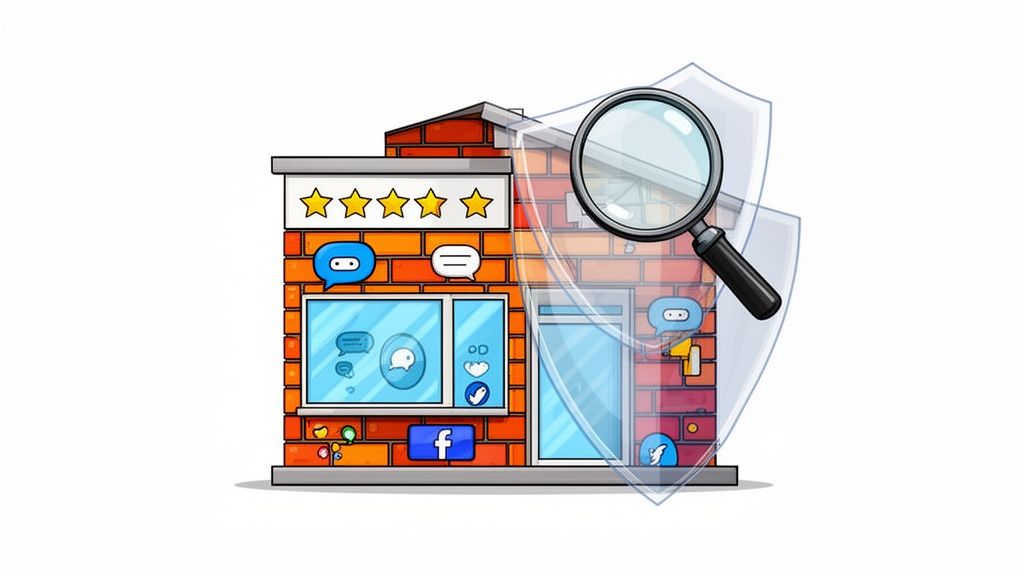
Stylized illustration showing a magnifying glass searching through social media interactions and user profiles.

In the pre-crisis phase, the best defence is a good offence. Social listening is that offence—your digital early-warning system. It’s how you spot the smoke before it turns into a raging firestorm.

Think of it as actively tuning into the online chatter to hear what people are really saying about your brand, your industry, and your competitors. Ignoring these conversations is like trying to pilot a ship at night with the radar switched off. You might be okay for a while, but you won’t see the iceberg until you’re right on top of it.

Places like Reddit and X (formerly Twitter) are ground zero for unfiltered opinions, frustrations, and emerging problems. This is where things start. Proactive monitoring isn’t just a nice-to-have; it's a non-negotiable part of modern communications crisis management. It shifts your team from being reactive firefighters to proactive guards in the watchtower, ready to spot threats on the horizon.

From Digital Noise to Actionable Signals

The internet is loud. The sheer volume of chatter can feel completely overwhelming. The trick is to cut through the noise and find the signals that actually matter. This is where specialised tools come in, acting like a digital tripwire for your brand’s reputation.

A platform like ForumScout lets you set up alerts for specific keyword combinations that often pop up right before a crisis. Imagine setting up trackers for phrases like:

  • "[Your Brand] + issue"
  • "[Your Product] + broken"
  • "[Your Service] + outage"
  • "[Competitor] + data breach"

When these phrases appear, you get an immediate notification in plain English. This gives you a critical head start, allowing you to investigate a potential problem hours or even days before it blows up.

The real power of social listening is its speed. It closes the gap between an incident occurring and your team becoming aware of it, which is often the most dangerous period in any escalating crisis.

This is especially true in a world of growing digital threats. Take the UK's National Cyber Security Centre (NCSC), for instance. They saw incident reports jump by 64% in a recent year, hitting a total of 2,005 reports. That spike, along with major disruptions like the National Air Traffic Services failure, highlights just how critical real-time monitoring has become. For businesses, where crises often ignite online, hourly tracking is vital to stop things from spiralling. You can read more in the full UK Government Resilience Framework update.

How to Prioritise Potential Threats

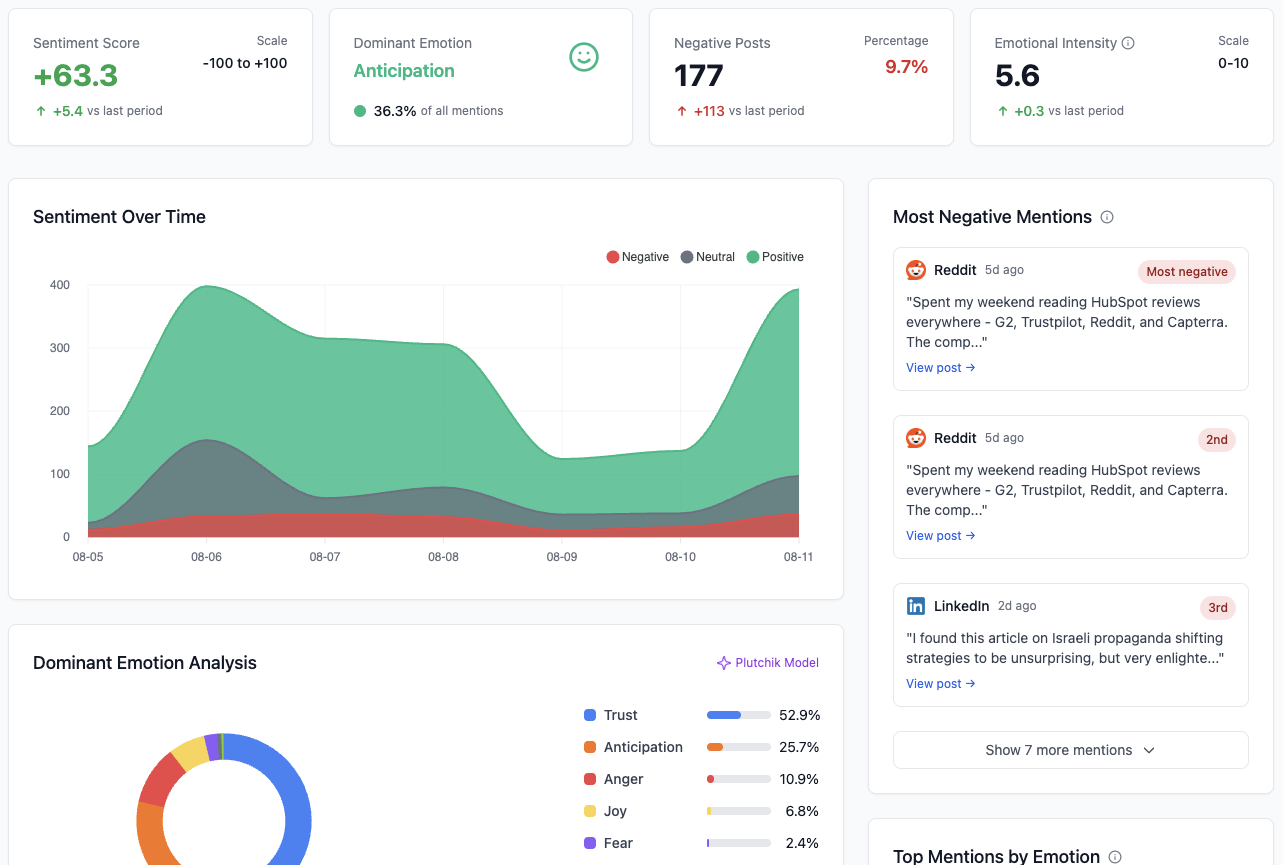
Once an alert flags a conversation, you need to figure out how serious it is. Not every negative comment is a five-alarm fire. This is where you triage, and features like sentiment analysis and hourly updates become your best friends.

  • Sentiment Analysis: This technology automatically reads the emotional tone of a mention. Is it positive, negative, or neutral? A sudden spike in negative sentiment is a clear red flag that demands your immediate attention.
  • Hourly Updates: The speed at which a conversation is spreading is a massive crisis indicator. Tools that refresh data every hour let you see if a single negative post is an isolated grumble or the start of something going viral.

By combining these features, you can build a simple but incredibly effective framework for deciding which threats to tackle first. To fine-tune your approach, you can also check out our detailed guide on how to create effective Reddit keyword alerts.

This approach means you don’t need a huge budget or a dedicated analytics department to identify credible threats. It makes proactive reputation management accessible to organisations of all sizes. By listening intently, you can manage your reputation with foresight, not just hindsight.

Learning from Real-World Crisis Management

Theory gives you the blueprint, but real-world examples show you how those plans hold up under pressure. It’s one thing to have a strategy on paper; it’s another to see it through when the stakes are highest. By looking at how other brands have navigated their own storms—both the triumphs and the train wrecks—we can pull powerful, practical lessons for our own playbooks.

There's often a huge gap between planning and readiness. One recent report found that while 72.4% of organisations feel good about their crisis capabilities, a shocking 30.1% admit their own staff don’t even know the plans exist. That disconnect is exactly where a manageable issue spirals into a full-blown PR disaster. You can learn more about these crisis management benchmarks and see how different incidents get handled.

A Masterclass in Transparency and Speed

One of the best modern examples of crisis management comes from a fast-food brand that ran out of its signature product due to a supply chain meltdown. Disaster, right? Instead of hiding, they leaned right into it with humour, humility, and total transparency.

Their response maps perfectly to the crisis lifecycle we covered earlier:

  1. Acute Crisis: The news broke that restaurants were closing. The brand’s first move wasn’t a stuffy corporate statement. It was a clever, self-deprecating apology on social media that owned the absurdity of the situation.
  2. Chronic Crisis: As the problem dragged on for days, they kept everyone in the loop with constant, honest updates. They even launched a dedicated webpage to show which locations were open and explained the logistical mess in simple terms.
  3. Post-Crisis: Once everything was back to normal, they took out full-page newspaper ads to thank customers for sticking with them. That final act didn't just fix the problem; it cemented their reputation as a brand that’s accountable and has a genuine personality.

So, what’s the takeaway here? They owned the mistake, communicated with unflinching honesty, and kept their brand voice consistent. In the end, they didn't just survive the crisis—they actually boosted customer loyalty and earned massive respect for how they handled it.

The Lesson: When a crisis hits, your first instinct might be to downplay it. Don't. Embrace radical transparency instead. Owning the problem head-on and communicating openly builds trust far more effectively than going silent or getting defensive.

The High Cost of a Slow Defence

On the flip side, history is littered with brands that fumbled their response and paid for it with long-term damage to their reputation. Think of the major airline that had a passenger forcibly dragged off an overbooked flight, all captured on video and shared globally in seconds. The company's initial reaction became a textbook case of what not to do.

Let’s break down where it all went wrong using the same lifecycle:

  • Acute Crisis: The video went viral. The CEO’s first statement was a disaster—it was cold, corporate, and tone-deaf, referring to the incident as "re-accommodating" a customer. It came across as victim-blaming.
  • Chronic Crisis: That first misstep gave public anger time to harden. For days, the airline was the target of global outrage and memes, while competitors happily piled on. Every apology that followed felt forced and reactive, not genuine.
  • Post-Crisis: The brand’s stock price took a nosedive, and they were buried under negative press for months. The damage to customer trust was immense, and the incident is still used as a prime example of terrible crisis management years later.

This case study is a brutal reminder of how devastating a slow, defensive, and unempathetic response can be. The failure to immediately show genuine concern and take responsibility created a narrative the company could never escape. The lesson is crystal clear: in a crisis, empathy isn’t a soft skill—it’s a strategic imperative.

Frequently Asked Questions About Crisis Management

Jumping into communications crisis management can feel overwhelming, especially if you're building a plan from scratch. Most businesses tend to get hung up on the same few questions. Let's cut through the noise and give you clear, straightforward answers to get you moving with confidence.

Think of this as your practical guide for getting a crisis strategy off the ground, tackling common hurdles like tight budgets and knowing when a small issue is about to become a big one.

How Can a Small Business Afford a Crisis Management Plan?

This is a big one. A lot of small businesses think a crisis plan is a luxury they just can't afford, but that’s a dangerous way to look at it. The truth is, you don’t need a massive budget to be prepared—you just need to be proactive. The key is to start small and focus on what matters most.

Begin by identifying your top three most likely crisis scenarios. Is it a negative product review going viral? A major service outage? Maybe an unhappy ex-employee? Once you’ve pinpointed your biggest risks, you can draft simple, pre-approved holding statements for each.

Key takeaway: A simple, documented plan is infinitely better than having no plan at all when a crisis hits. The cost of inaction will always be higher than the cost of preparation.

Pick one person to be your official spokesperson to keep all your messaging consistent. And most importantly, use an affordable social listening tool to get that vital early warning. Preparation, not a big budget, is your best defence.

What Is the Most Critical Element of a Crisis Response?

When a crisis breaks, two things matter more than anything else: speed and transparency. In an age where news travels in an instant, a slow response is a losing game. It creates a vacuum, and that vacuum will quickly be filled by critics, competitors, or misinformation.

Your first communication needs to be fast. It can be as simple as acknowledging the issue and promising that more information is coming soon. That simple act shows you’re on top of it and buys you precious time to get the facts straight.

After that initial acknowledgement, every message must be honest and empathetic. Clearly explain what happened, what you're doing to fix it, and how you'll support anyone affected. Remember, it's always easier to keep trust than to rebuild it from the ground up.

How Do You Know If a Negative Comment Is a Real Crisis?

Not every angry comment deserves a full-blown crisis response. The real skill is learning to spot the difference between a routine customer complaint and the first tremors of a brewing storm. A simple triage framework can help you quickly gauge the threat level.

  • Volume: Is this one person’s opinion, or are lots of people saying the same thing across different platforms?
  • Velocity: How fast is the conversation spreading? A sudden, rapid spike is a major red flag.
  • Sentiment: Is the tone mild frustration, or is it intense anger and outrage?
  • Influence: Is an industry leader, journalist, or major influencer talking about the issue?

If you see a sudden spike in two or more of these factors, you’re looking at a credible threat that could cause widespread damage to your reputation. This approach helps you focus your energy on the fires that actually need putting out.

How Can We Use Social Listening After a Crisis Ends?

Your work isn’t done just because the storm has passed. What you do after the crisis is a crucial step in strengthening your playbook for the future. Social listening is your best friend during this reflective phase.

Use it to track the long-term shift in how people feel about your brand. Are conversations returning to normal, or is there lingering negativity? You can also analyse which of your response messages connected best with your audience. This data creates an invaluable feedback loop, helping you refine your communication and be even better prepared for whatever comes next.


Ready to build your early warning system? ForumScout helps you monitor conversations across the web, so you can detect potential crises before they escalate. With AI-powered filtering and hourly updates, you'll get the actionable insights you need to protect your brand's reputation. Start your free trial at https://forumscout.app.