- 22 min read
Managing Crisis Communication: A Practical Playbook for Real-Time Response
Let's be honest: managing crisis communication effectively isn't about having a crystal ball. You'll never predict every twist and turn. Instead, it's about building a robust framework that lets you act with speed and clarity when things inevitably go sideways.
A solid foundation is what turns sheer panic into a structured, manageable process. It ensures your team is ready to go long before the first sign of trouble. This proactive approach is the absolute core of modern crisis management.
Building Your Crisis Communication Foundation

The best time to prepare for a crisis was yesterday. The second-best time is right now.
Waiting until you're in the thick of it to figure out who's in charge is a guaranteed recipe for disaster. The real work starts by getting the right people in a room and giving them the tools they need to perform under extreme pressure.
This isn't just about writing a document that gathers dust on a server. It’s about creating operational certainty and embedding a crisis-ready mindset deep into your company's culture.
Assemble Your Dedicated Crisis Team
Your first move is to assemble a core crisis communication team. This isn't just a list of names on a spreadsheet; it's a designated group with crystal-clear responsibilities, small enough to be nimble but diverse enough to cover all your bases.
Here's a breakdown of the core roles you'll need to fill. Getting this right eliminates the "who does what?" chaos when every second is critical.
Crisis Response Team Core Roles and Responsibilities
| Role | Primary Responsibility | Key Tasks |
|---|---|---|
| Team Lead | The ultimate decision-maker, providing final sign-off on strategy and messaging. | • Provides strategic direction • Approves key communications • Liaises with executive leadership |
| Communications Lead | Manages the narrative by drafting, approving, and distributing all communications. | • Drafts holding statements and press releases • Manages social media channels • Briefs spokespeople • Monitors media coverage |
| Legal Counsel | Reviews all statements to mitigate legal risk and ensure regulatory compliance. | • Vets all public-facing statements • Advises on potential liabilities • Ensures compliance with industry regulations |
| Operational Lead | Provides technical facts and context from the affected department (e.g., Head of IT for a data breach). | • Gathers accurate operational details • Verifies technical information • Coordinates with on-the-ground teams |
With these roles clearly defined, you establish a streamlined flow of information and decision-making that can withstand the pressure of a real crisis.
Develop Pre-Approved Holding Statements
When a crisis hits, you rarely have all the facts right away. The problem? Silence is often mistaken for guilt or incompetence. Pre-approved holding statements are your answer, letting you respond within minutes while your team investigates.
A well-crafted holding statement acknowledges the situation, expresses empathy, and outlines your immediate next steps. It buys you crucial time to get the facts straight without leaving a dangerous communication vacuum.
Get ahead by drafting templates for likely scenarios, such as:
- A sudden service outage
- A viral negative customer review
- An unexpected data security issue
- Allegations of employee misconduct
Have these templates signed off by your legal and leadership teams in advance. That way, they're ready to be deployed in minutes, not hours. A thorough Business Impact Analysis can help you figure out which scenarios pose the biggest threat and need prioritising.
Create a Practical Escalation Matrix
Not every negative tweet is a five-alarm fire. An escalation matrix is a simple but incredibly powerful tool that maps potential issues to specific response levels, ensuring your reaction is always proportional to the threat.
For example, a single grumpy tweet might be a Level 1 issue, handled by a community manager. But widespread media coverage of a product defect? That’s a Level 4, immediately activating the entire crisis team. To make this work, you need a reliable reputation monitoring service feeding you the right data.
This structured approach is non-negotiable. In the UK, crisis communication has moved from a niche PR function to a core operational risk. Official government guidance stresses the need for 'accurate, relevant and timely information' and a clear framework that moves from Prepare to Respond to Recover.
Tools like ForumScout are built on this very logic, enabling hourly monitoring of social and news chatter so teams can spot a brewing issue in minutes, not days.
Catching and Handling Problems Before They Explode

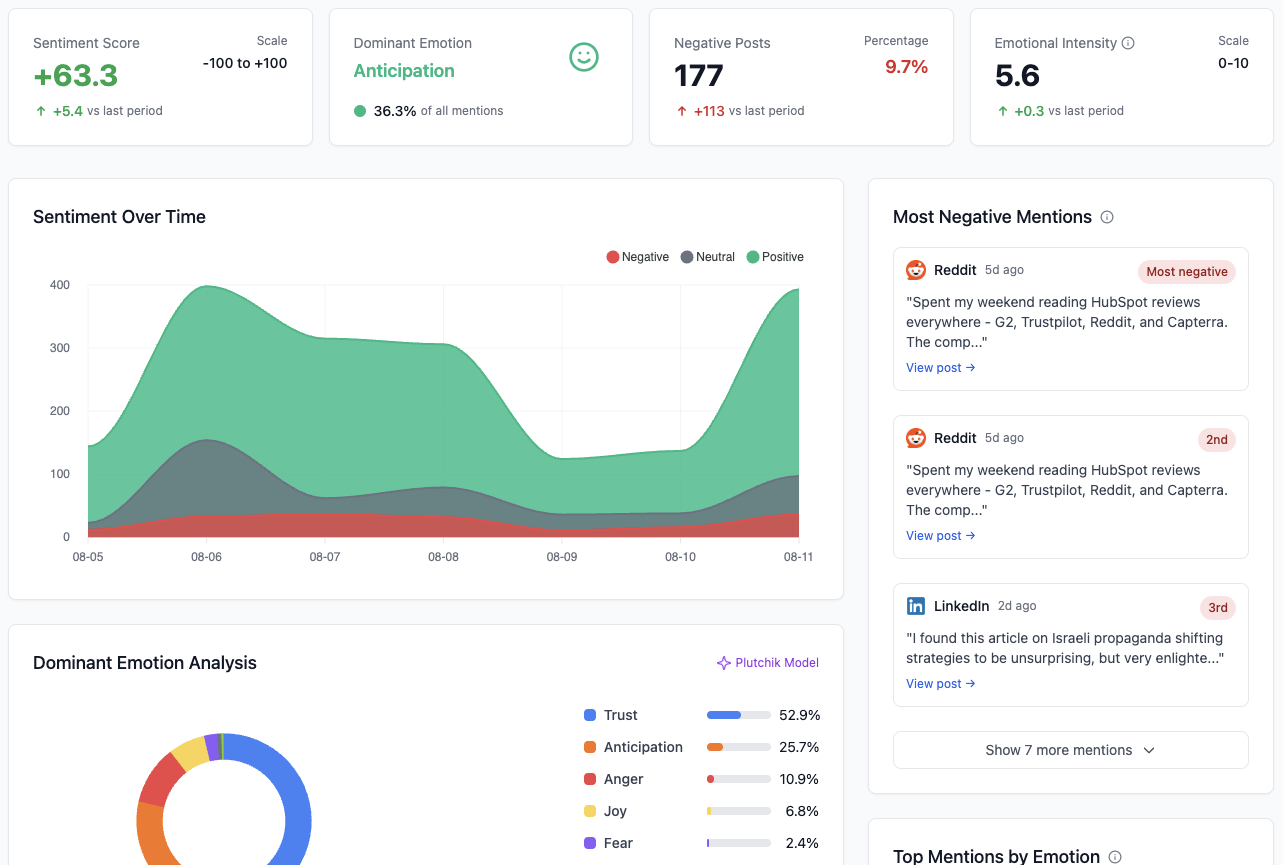
A full-blown crisis rarely just appears out of nowhere. It almost always starts with a faint signal—a frustrated tweet, a one-star review, or a single thread on a niche Reddit community. The difference between a minor blip and a major catastrophe often comes down to one thing: speed. How quickly can you spot and correctly interpret these early warnings?
At this stage, managing crisis communication isn't about damage control. It’s about proactive detection. You need a system that acts as your eyes and ears online, catching these sparks before they become infernos. This is where real-time monitoring becomes your secret weapon, buying you the one thing you can’t get back—time.
Building Your Early Warning System
To catch these signals, you have to go way beyond basic social media notifications. A proper early warning system is all about comprehensive social listening. That means actively tracking conversations not just about your brand, but about your industry, competitors, and key topics across a huge range of platforms.
A tool like ForumScout can be set up to monitor everything from X (formerly Twitter) and Reddit to forums and news sites, giving you hourly updates. This constant stream of data is what your entire detection process will be built on. You can get a deeper understanding of what social listening is and how to get it right in our detailed guide.
Here’s what you absolutely need to be tracking:
- Direct Brand Mentions: This includes both tagged (@yourbrand) and untagged ("your brand") mentions. Don't assume everyone will tag you.
- Key Executive Names: Keep an eye on conversations around your CEO and other public-facing leaders. Their reputation is your reputation.
- Product and Service Keywords: Monitor mentions of specific products, especially when they appear alongside words like "broken," "scam," or "disappointed."
- Competitor Crises: When a competitor stumbles, it’s a chance to learn. It can also be a sign of a bigger industry issue that could affect you next.
Separating Signal from Noise with AI Filtering
Let's be real—the biggest challenge with monitoring is the sheer volume of data. Thousands of mentions can pour in daily, and most of it is just noise. The trick is to separate the everyday chatter from the genuine threats. This is where AI-powered filtering and sentiment analysis become completely essential.
Modern tools let you set up smart alerts using natural language. For example, you could create a high-priority alert for any mention that includes a product name, a negative emotion like "anger," and has more than 100 retweets. This kind of setup automatically brings the most critical conversations to the top, so you're not manually sifting through thousands of posts.
The goal isn't just to see every mention. It’s about seeing the right mentions at the right time. AI filtering helps your team focus its energy on potential crises, not on routine customer service stuff.
Sentiment analysis adds another vital layer, automatically flagging mentions as positive, negative, or neutral. A sudden nosedive in sentiment is a massive red flag that something is wrong and needs a closer look, right now. This data-first approach takes all the guesswork out of your initial assessment.
A Practical Triage Framework to Guide Your Response
Once your system flags a potential issue, your team needs a clear, consistent way to figure out how serious it is. A triage framework, which you can think of as a simple decision tree, helps guide them to a fast and proportional response. It stops you from overreacting to minor things while making sure the real threats get escalated immediately.
Your triage process should answer a few straightforward questions to classify an issue:
- What’s the scope? Is this one isolated comment, or is the conversation spreading like wildfire? Look at the velocity of mentions.
- Who’s talking? Is the complaint from a regular customer or a high-profile influencer, journalist, or verified account?
- What’s the platform? A critical post on a major news site carries a lot more weight than an anonymous comment on a tiny forum.
- Is there a credible threat? Does the issue involve a legal risk, a safety concern, or serious allegations that could damage your reputation?
Based on the answers, you can assign each issue a severity level from your escalation matrix (e.g., Level 1 to 4). This immediately tells everyone who needs to be looped in and what the very next steps are, ensuring your response is swift and organised when it truly matters.
Crafting Your Crisis Message with Clarity and Empathy

Once your early warning system flags an issue, your message becomes the most important asset you have. The words you choose, the tone you take, and how fast you deliver them can either calm the storm or add fuel to the fire. This is where theory gets real, fast.
Effective crisis messaging isn't about spin. It’s about control, clarity, and genuine connection. You have to own the narrative before misinformation fills the void, and you do that by communicating with precision and empathy.
The A.C.E. Framework for Your First Response
When the pressure is on and every second counts, you need a simple framework you can rely on. I've always found the A.C.E. framework to be a lifesaver. It gives your initial response a solid structure, making sure you hit the three most critical points.
- Acknowledge: Your first move is always to acknowledge the situation. State what you know and confirm you're on top of it. Don't use language that downplays the problem—it just makes you look like you're hiding something.
- Care: Show genuine empathy for anyone affected. Whether it’s customers dealing with a service outage or employees worried about a security breach, letting them know you understand their frustration is vital for building trust.
- Explain: Clearly outline the immediate steps you're taking. It's okay if you don't have all the answers yet. What matters is explaining what you are doing right now to investigate and fix the problem.
This Acknowledge, Care, Explain approach grounds your message in honesty and action. It immediately positions your company as responsive and responsible, which is exactly what you need in a crisis.
Tailoring Your Message for Different Channels
A crisis message is not one-size-fits-all. You need to adapt your core message to fit the audience and constraints of each channel. Simply copying and pasting the same text everywhere looks lazy and can seriously damage your credibility.
Channel-Specific Messaging Examples
Let's look at how this plays out in the real world.
| Channel | Tone & Style | Example Message |
|---|---|---|
| X (Twitter) | Short, factual, and direct. Use threads for ongoing updates. | "We are aware of a significant service outage affecting our UK users. Our engineering team is actively investigating the cause and working on a fix. We sincerely apologise for the disruption and will post our next update here in 30 minutes." |
| Internal Memo (Email/Slack) | Detailed and reassuring. Give your team more context and clear instructions. | "Team, we're currently managing a system-wide outage. We know this is causing major issues for our customers, and our top priority is getting services back online. Here is what we know so far... We will keep you updated via this channel every hour." |
| Press Statement | Formal and factual. Stick to what's been confirmed and legally approved. | "This morning, [Company Name] identified a network disruption impacting our core services. We have mobilised our technical response team to restore functionality as quickly as possible. We are committed to transparency and will provide further information as it becomes available." |
The key is maintaining a consistent core message while tailoring the delivery. This ensures everyone gets the same basic facts, just packaged in the right way for each platform.
Establishing a Single Source of Truth
During a crisis, rumours spread like wildfire. To fight this, you need to establish a single source of truth—one central, official place where everyone can find the latest, most accurate information.
This is usually a dedicated landing page on your website. Make it easy to find, update it religiously, and keep all relevant information in one place.
A single source of truth stops people from speculating or trying to piece together updates from scattered social media posts. It shows you're in control and committed to open communication.
In every social post, email, or press release, drive people back to this central hub. This consolidates your efforts and builds confidence that you're giving them the full, honest picture. Transparency is everything here; for a deeper dive, it's worth reading up on The Importance of Transparent Communication With Users. This approach helps build trust, even when the news is bad.
Finally, remember that empathy isn't just a buzzword; it's an action. The tone of your message matters just as much as the facts. To see how your messages are landing, you have to understand the emotional response they’re creating online. Our guide offers deeper insights into using sentiment analysis for social media to measure and understand what people are really thinking.
Engaging Key Stakeholders to Manage the Narrative

Effective crisis communication is never a one-way street; it's a conversation. Once your initial statement is out in the wild, the real work of steering the narrative begins. This is all about actively and thoughtfully engaging with the people who matter most—your customers, employees, investors, and partners.
Each of these groups has its own set of concerns and needs a slightly different approach. If you ignore one, you create a dangerous information vacuum where rumours and misinformation can take root. Proactive engagement, on the other hand, helps you build a network of support that can steady the ship and start the crucial process of rebuilding trust.
Empowering Your Customer-Facing Teams
Your customer support team is on the front line. During a crisis, they’re going to be hit with a wave of questions, complaints, and sheer frustration. Leaving them unprepared isn't an option. They need to be equipped to handle this surge with confidence and consistency.
The key is to arm them with a single, approved set of talking points and a clear Q&A document. Think of this as a living resource, updated in real-time as new information flows from the core crisis team.
This simple step ensures every customer gets the same accurate information, no matter who they speak to. It prevents the kind of conflicting messages that can seriously erode trust and make your company look disorganised.
Your support team's brief should include:
- Approved language to acknowledge customer frustration with genuine empathy.
- Clear, factual answers to the most common questions you're anticipating.
- An escalation path for complex or sensitive enquiries they can't handle alone.
- Firm instructions on what not to say, like speculating on causes or timelines.
Maintaining Trust Through Internal Communication
Your employees are your most important stakeholders and, when treated right, your most credible ambassadors. If they don't know what’s happening or feel like they’re being kept in the dark, morale will plummet. Worse, damaging internal rumours can easily leak out into the public domain.
Transparent internal communication isn’t a nice-to-have; it's a non-negotiable part of managing crisis communication. Your team should hear important news from you first, not from a news alert pinging on their phone.
Keep your employees in the loop with regular, honest updates. This builds psychological safety, maintains productivity, and stops them from having to fill in the gaps with speculation.
Organise short, all-hands meetings led by a senior leader to give updates and answer questions directly. Follow up with detailed memos via internal channels like Slack or email. This makes everyone feel respected and included, turning a nervous workforce into an informed, unified team.
Engaging Influencers and Community Voices
In any crisis, external voices are going to join the conversation. These could be industry journalists, influential bloggers, community leaders, or even vocal customers with large social media followings. Identifying these key voices early is crucial.
Instead of seeing them as a threat, view them as a potential channel for getting accurate information out there. Reach out to these individuals proactively with a direct, honest briefing. Give them the same factual updates you're sharing with everyone else.
This strategy can turn potential critics into informed commentators. By giving them direct access to the real story, you help stop them from relying on speculation. It's a powerful way to add credibility to your narrative and reach audiences you might not otherwise connect with.
This principle of proactive engagement is mirrored in the public sector. For instance, local government in the UK has significantly stepped up its crisis communication capabilities. With 85% of communications heads rating the Local Government Association's support positively, councils now expect their private-sector partners to show the same level of professionalism. This means having prepared statements, clear escalation paths, and fact-based updates ready to go. You can find more insights in the Heads of Communications Survey Report on local.gov.uk.
By segmenting your stakeholders and communicating with intention, you can build a coalition of support. This multi-pronged approach is fundamental to navigating a crisis successfully and emerging with your reputation intact.
Conducting a Post-Crisis Analysis for Future Resilience
When the storm of a crisis finally passes, the temptation to just breathe a sigh of relief and move on is huge. But the real work—the part that builds long-term resilience—is just getting started. This isn't the end; it's your chance to learn, adapt, and make sure you’re much stronger for whatever comes next.
This final stage of managing crisis communication is all about a deliberate, honest review of how everything went down. It’s about turning a painful event into a practical, actionable learning opportunity. If you skip this, you’re just setting yourself up to repeat the same mistakes all over again.
Measuring the Impact of Your Crisis Response
To figure out if your response actually worked, you have to look beyond surface-level metrics. The real goal is to measure the impact on your brand's reputation and how people perceive you now. That means digging into specific data points that tell the full story.
Start by pulling key metrics from right before, during, and after the crisis hit.
- Brand Sentiment: Fire up your social listening tool and track the split of positive, negative, and neutral mentions. Did your messaging successfully pull sentiment out of the red and back toward neutral or positive? A good response will show a clear recovery trend.
- Mention Volume: How did the number of conversations change? A spike is obviously expected, but you should see it gradually return to your normal baseline. If you're still seeing a high volume of negative chatter, the crisis is still simmering.
- Share of Voice (SOV): How did your brand's mention volume stack up against your competitors during this time? Did the crisis cause your SOV to tank, or did your sharp response actually help you own more of the conversation in a good way?
These numbers give you a solid, quantitative view of your performance. For example, seeing a 30% drop in negative sentiment within 48 hours of releasing your A.C.E. statement is a powerful sign that your message landed.
Analysing the Narrative with Social Listening
Beyond the raw numbers, you need to get a feel for the quality of the conversation. This is where your social listening tools come in handy for analysing how the narrative shifted over time. What were the main themes people were talking about? Which of your key messages did your audience actually pick up and run with, and which ones completely missed the mark?
A thorough post-crisis analysis isn't about pointing fingers. It's a team effort to find the weak spots in the system and strengthen your playbook for the future. The goal here is improvement, not punishment.
For UK organisations, the context of public wellbeing can seriously raise the reputational stakes. The UK’s escalating mental health pressures are a perfect example of how failing to manage crisis communication can make a bad situation worse. Urgent referrals to crisis care teams for under-18s in England, for instance, more than tripled in just six years. Using social listening, teams can measure spikes in anxiety-related talk, spot misinformation about support services, and jump in with clear, helpful signposting. You can dive deeper into this challenge in Mind's 'Care Before Crisis' report.
Organising a Blameless Post-Mortem Meeting
Once you've got your data, it's time to get the crisis team together for a post-mortem. The most important thing here is to create a space where everyone feels safe enough to speak honestly without worrying about getting blamed.
Your agenda should really boil down to three core questions:
- What Went Well? Start by celebrating the wins. Did your pre-approved holding statements let you respond in under 15 minutes? Did the customer support team feel like they had everything they needed in the Q&A document? Acknowledge what worked so you can make it standard practice.
- What Could Have Been Improved? This is where you pinpoint the friction. Was there a bottleneck waiting for legal sign-off? Did a message on one channel accidentally contradict another? Keep the focus on the process, not the people.
- What Will We Do Differently Next Time? This is the most critical part. Turn what you've learned into concrete actions. Maybe that means updating your escalation matrix, adding a new scenario to your playbook, or getting more media training for your spokespeople.
Make sure every action item has a clear owner and a deadline. That’s how you turn painful lessons into real, tangible improvements to your crisis communication plan. This cycle of responding, measuring, and refining is what separates the brands that just survive from the ones that come out stronger. It turns your team from reactive firefighters into strategic guardians of your brand's reputation.
Frequently Asked Questions
Even with the best playbook, a real crisis always throws a few curveballs. Here are some straight answers to the questions that come up most often, whether you're a small startup or a global brand.
What Is the First Step When a Crisis Hits?
Breathe. Before you even think about tweeting, the very first move is to activate your crisis team and pull up your escalation matrix. Job number one is getting the facts straight internally.
Fire up your social listening tools to get a raw, unfiltered look at the conversation. What's the volume? What's the sentiment? Your only goal in this initial phase is to figure out exactly what happened, who's affected, and what the immediate fallout looks like. If you rush this part and release bad information, you’ll lose credibility in a heartbeat. Nothing kills trust faster.
This is where a pre-written holding statement saves the day. It’s a simple way to tell the public, "We're on it," buying you precious time to gather the facts without looking like you’re ignoring the problem.
How Can a Small Business Manage This?
You don’t need a massive PR budget to handle a crisis well. For small businesses, it all comes down to smart prep and affordable tools. The most important thing—having a plan—costs nothing but a bit of time.
Start simple. Draft a few message templates for the most likely fires you might have to put out. Assign clear roles, even if it means one person wears three different hats. Most importantly, decide which channels you'll use to communicate and stick to them.
A few budget-friendly pointers:
- Write It Down: A simple document outlining your process, who does what, and your core messages is a game-changer.
- Use Smart Tools: You don't need an enterprise-level suite. A cost-effective social listening tool, like the ForumScout Growth plan, can give you that critical early warning without breaking the bank.
- Honesty Over Polish: In a crisis, a fast, sincere text-based update on your main social channel is often a million times better than a slick video that took too long to produce.
How Do I Know When a Crisis Is Over?
A crisis isn't over when you stop talking about it. It’s over when your audience does. You need to watch the right signals to know when you can shift from active response back to business as usual.
The big signs? A massive drop in negative online mentions and a return to your normal sentiment baseline. You'll see this clearly in your analytics. Other good indicators are when the flood of media enquiries slows to a trickle and online conversations start shifting back to your products or services, not the problem.
This next phase is all about recovery. You'll still need to keep an eye on the conversation to make sure nothing flares up again, but now’s the time to start proactively sharing positive stories and updates. It's how you rebuild trust and start writing the next chapter for your brand.
Ready to build your own early warning system? ForumScout gives you the power to monitor conversations across the web, so you can detect and manage issues before they become a crisis. Start your free trial today and see what everyone is saying about your brand.