- 21 min read
Your Guide to Sentiment Analysis in Social Media
Sentiment analysis is the secret sauce of modern social media listening. Itâs the automated process of figuring out the feeling behind all those online conversations. Instead of just counting every time your brand gets mentioned, this technology reads between the lines to tell you if people are happy, upset, or just neutral.
What Is Sentiment Analysis and Why It Matters Now

Imagine trying to hear every whisper about your brand in a packed football stadium. Thatâs social media. The sheer volume of chatter makes it impossible to manually keep up with what customers are saying, let alone grasp how they feel. This is where sentiment analysis becomes your superpower.
Think of it as an emotional compass for your business. It automatically listens to millions of conversations and interprets the feelings driving them, helping you move beyond basic metrics to truly understand public perception.
The Shift from Counting to Understanding
For years, brands chased vanity metrics like follower counts and likes. But a high mention count doesn't tell you the whole story. Are people raving about your new update or complaining that itâs buggy? Sentiment analysis gives you that crucial context.
It takes all that messy, unstructured social data and sorts it into clear, actionable piles. This is essential for making smart decisions, as it helps you pinpoint exactly what customers love about your products and, more importantly, what drives them crazy.
Sentiment analysis is the key to navigating the digital world, protecting your reputation, and finding real opportunities for growth in the noise. It turns chaotic online feedback into a strategic asset.
Why This Matters for Every Business
Whether you're a solo founder or a global enterprise, understanding customer sentiment is no longer a "nice-to-have." The market has caught on. In the UK alone, the social media analytics marketâthe engine behind sentiment analysisâis set to jump from USD 729.0 million to a staggering USD 2,485.9 million by 2030. You can read more about this growth from Grand View Research.
This explosive growth is happening for a reason. The benefits are immediate:
- Early Crisis Detection: Itâs an early warning system. A sudden spike in negative comments gets flagged long before it becomes a full-blown PR disaster.
- Enhanced Customer Support: You can automatically spot and route frustrated customer comments to your support team for a quick, helpful response.
- Actionable Product Feedback: It uncovers patterns in feedback, revealing unmet needs that can directly inform your product roadmap.
- Competitive Intelligence: By analysing the sentiment around your competitors, you can spot their weaknesses and lean into your strengths.
At the end of the day, sentiment analysis gives you the intelligence to build a more responsive, customer-focused brand. Itâs all about listening, understanding, and acting on what your audience is genuinely feeling.
How AI Deciphers Emotion in Online Conversations

So, how does a machine actually learn to understand something as messy and human as emotion? Itâs not magic, but a combination of smart training and some pretty sophisticated techniques. This all falls under the umbrella of Natural Language Processing (NLP), the part of AI dedicated to teaching computers how to read and make sense of human language.
Think of it as teaching a computer to read between the linesâto spot the feeling behind the words. There isn't just one way to do this. Different methods offer different levels of accuracy, kind of like the difference between a simple dictionary definition and a chat with a seasoned linguist.
The Word Dictionary Approach
The most basic method is Lexicon-based analysis. Imagine giving your computer a massive dictionary where every word has a score. Words like âlove,â âamazing,â and âexcellentâ get positive points, while words like âhate,â âawful,â and âdisappointedâ get negative ones.
When the system looks at a social media post, it just tallies up the scores. If the total is positive, the post is flagged as positive. If itâs negative, itâs marked as negative. It's fast and simple, but it often misses the bigger picture.
Teaching AI with Examples
A much smarter approach is supervised Machine Learning (ML). This is like teaching a child to recognise facial expressions. You don't just give them a list of rules; you show them thousands of photos of happy, sad, and angry faces until they start spotting the patterns themselves.
For sentiment analysis in social media, data scientists feed the model a huge dataset of online posts that have already been labelled by humans as positive, negative, or neutral. The model chews through these examples to learn the complex patterns, slang, and word combinations linked to each feeling. This makes it far more accurate than the simple dictionary method because it starts to understand context.
This training process allows the AI to move beyond individual word scores and begin to grasp how words work together to create meaningâa crucial step for understanding real human conversation.
Understanding Sarcasm and Nuance
The most powerful methods use Deep Learning and Transformer models. These are the state-of-the-art systems behind today's most capable AI. Think of them as expert linguists who not only understand words but also get the joke, spot sarcasm, and appreciate irony.
These models can tell the difference between "I'm sick of this terrible service" (negative) and "That new feature is sick!" (positive). They analyse the entire sentence and the relationships between words, which allows for a much deeper and more accurate reading. This is absolutely vital for social media, where language is informal, creative, and packed with nuance. Today's best AI social listening tools rely on these advanced models to deliver truly reliable insights. https://forumscout.app/blog/ai-social-listening-tools
Comparing Sentiment Analysis Techniques
Choosing the right approach really depends on what you needâspeed, accuracy, or a deep understanding of nuance. To help you see the difference at a glance, hereâs a quick breakdown of the three techniques.
| Technique | How It Works (Simple Analogy) | Pros | Cons | Best For |
|---|---|---|---|---|
| Lexicon-Based | Using a word dictionary with scores. | Fast and easy to set up. | Lacks context; struggles with sarcasm. | Basic, high-level trend analysis. |
| Machine Learning | Learning from thousands of labelled examples. | More accurate and context-aware. | Needs a large, labelled dataset to train. | Most general business use cases. |
| Deep Learning | Understanding complex language patterns. | Highest accuracy; understands nuance and sarcasm. | Computationally intensive and complex. | Brands needing precise, granular insights. |
Ultimately, this evolution from simple word-counting to deep contextual understanding is what makes modern sentiment analysis such a powerful tool for any brand paying attention to online conversations.
Putting Sentiment Analysis into Practice

Understanding the theory is one thing. But turning it into tangible results? That's where sentiment analysis stops being a clever bit of tech and becomes a real business advantage. Smart brands don't just use it for reports; they use it as a proactive engine for growth, reputation management, and making customers happy.
Let's break down the most impactful, real-world applications. These arenât just ideasâthey're practical strategies you can use to turn chaotic social chatter into a clear strategic asset.
Safeguard Your Brand Reputation
Think of consistent sentiment tracking as an early-warning system for your brandâs health. A sudden dip in sentiment can be the first sign of a brewing PR crisis, giving you a crucial head start to manage the situation before it spirals.
By setting up automated alerts for sharp spikes in negative mentions, you can immediately investigate the cause. Is it a faulty product? A marketing campaign that missed the mark? A service outage? Pinpointing the problem lets your team craft an informed, empathetic response and neutralise a potential crisis.
This proactive stance is vital. Nearly half (49.3%) of adult internet users in the UK now use social media to discover new products. With millions of users spending hours on these platforms, a wave of negative sentiment can wreck perceptions overnight, making real-time monitoring non-negotiable. You can dive deeper into these trends in the latest digital report from We Are Social.
Elevate Your Customer Service
Customer service doesn't just happen over the phone anymore. Social media is the new frontline, and sentiment analysis is your best tool for triaging conversations quickly and effectively.
Instead of manually sifting through hundreds of mentions, a system can automatically flag posts with strong negative sentimentâlike those with words such as "frustrated," "broken," or "unresolved"âand route them straight to your support team.
This workflow ensures the most urgent customer issues get addressed first, dramatically cutting response times and showing frustrated customers that you're listening and ready to help.
This approach turns your social media presence from a simple marketing channel into a responsive and effective support hub. Itâs all about meeting customers where they are and solving their problems with speed and empathy, turning a negative experience into a positive one.
Sharpen Your Competitive Intelligence
Your competitors' customers are talking, and their feedback is a goldmine of strategic information. By applying sentiment analysis in social media to conversations about your rivals, you can uncover their biggest weaknesses and your greatest opportunities.
Imagine discovering a recurring theme of negative sentiment around a competitor's confusing checkout process. Thatâs a clear signal of a market gap you can fill. You can then highlight your own seamless user experience or award-winning support in your marketing.
Hereâs how you can turn competitor sentiment into an advantage:
- Product Gaps: Identify features their customers are requesting or complaining about that you already offer.
- Service Failures: Pinpoint common complaints, like slow delivery or unhelpful support, and contrast them with your brand's strengths.
- Campaign Reception: Analyse the sentiment around their latest marketing launch to see what resonated and what fell flat.
This kind of intelligence lets you position your brand far more effectively, crafting messages that directly address the pain points your competitors are creating.
Build a Customer-Driven Product Roadmap
Finally, sentiment analysis gives your product team a direct line to the people who matter most: your users. By tracking sentiment related to specific features, you can move beyond guesswork and build a roadmap people actually want.
Analyse conversations around feature requests, bug reports, and general usability. A high volume of negative sentiment clustered around one part of your app, for example, is a massive red flag that it needs immediate attention from your developers.
On the flip side, tracking positive sentiment can validate recent updates and highlight what users love most. This feedback loop is incredibly valuable, ensuring your product evolves in a direction that genuinely serves your customers' needs and keeps them loyal for the long run.
How to Implement Your Sentiment Analysis Strategy
Alright, let's move from theory to action. This is where sentiment analysis stops being a concept and starts delivering real value. Firing up your own program might sound intimidating, but with a modern social listening tool, itâs really just a matter of telling it what to listen for and then acting on what you hear.
We're not talking about some massive, months-long data science project. The goal here is to build a simple, repeatable workflow that turns online chatter into a strategic advantageâstarting from day one. Letâs walk through the steps to get your strategy off the ground.
Start with Smart Keyword Definition
The entire foundation of your analysis rests on tracking the right conversations. This goes way beyond just your brand name. A solid keyword strategy monitors the whole ecosystem of discussions that shape your business.
Think bigger. Your keyword list should cover:
- Brand Names: This includes your official name, any common abbreviations, and even the usual misspellings people make.
- Product and Service Lines: Track each of your specific offerings to get targeted, granular feedback.
- Key People: Keep an eye on the sentiment around your CEO, founder, or other public-facing team members.
- Industry Conversations: Monitor overarching industry trends, popular hashtags, and, of course, your competitors' names.
Casting a wider net like this ensures you capture not just direct feedback but all the surrounding context that shapes how customers see you. To get this right, you'll want to discover top social media sentiment analysis tools that can handle this kind of comprehensive tracking.
Filter the Noise and Focus on What Matters
Once your keywords start pulling in data, the next job is to cut through the noise. Not every mention is going to be relevant. A good social listening tool uses AI to help you zero in on the conversations that actually matter to your goals.
For example, you can set up filters to isolate mentions with intensely negative sentiment or flag any that come from high-authority accounts. This kind of intelligent filtering stops your team from getting buried in data and makes sure theyâre spending their time on the interactions that count.
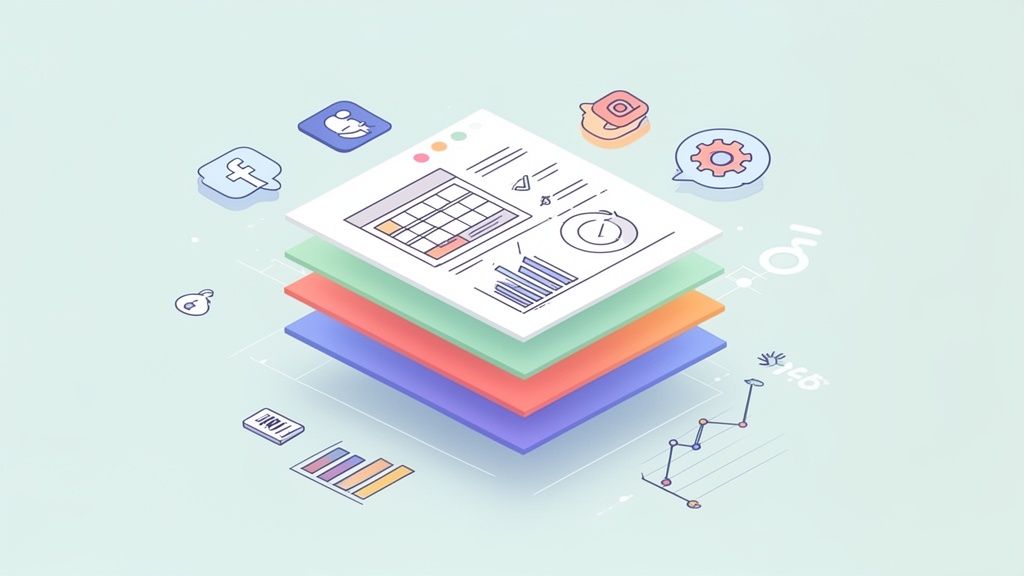
The flow below gives you a sense of how a typical workflow moves from broad keyword tracking to targeted, actionable insights.

This process effectively turns a firehose of data into a manageable stream of conversations, making your whole effort far more efficient.
Interpret Your Dashboard and Spot Trends
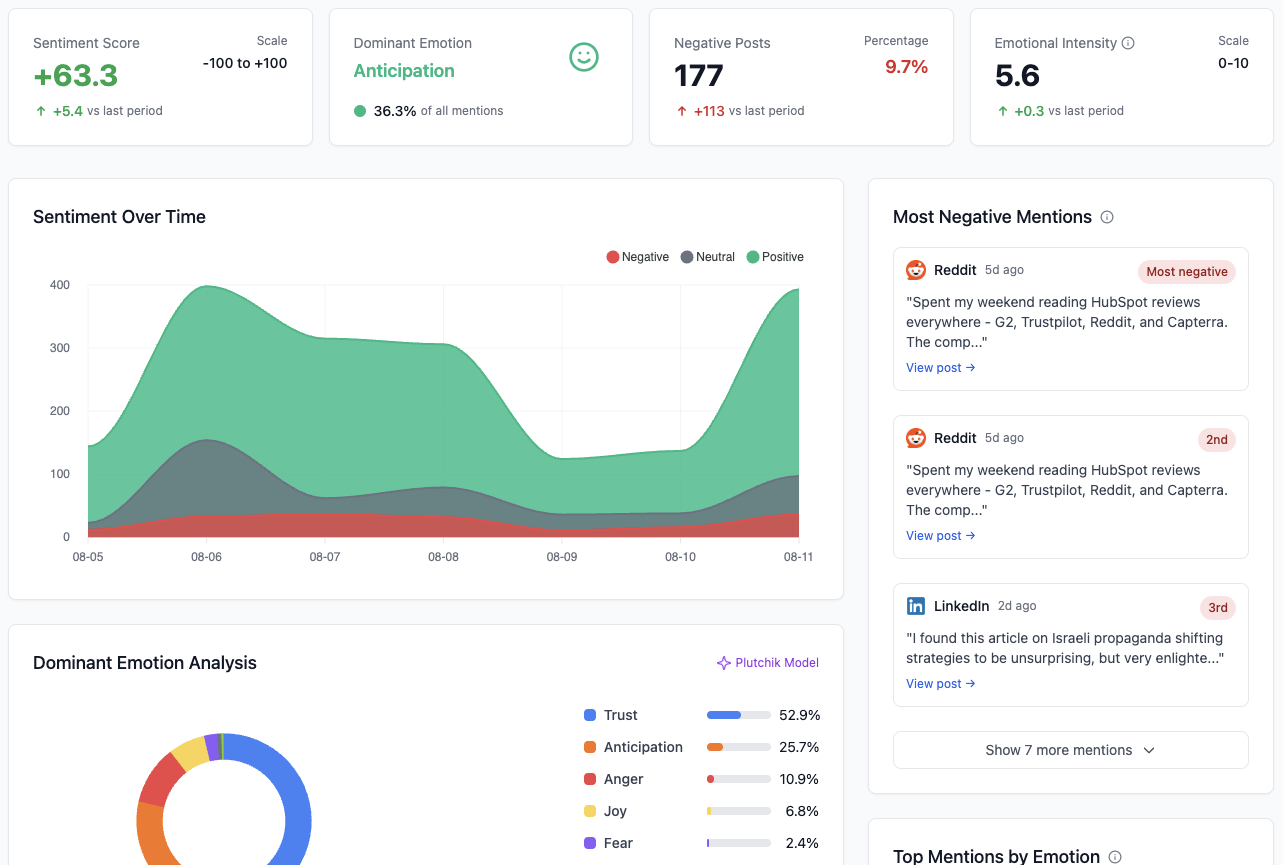
Think of your social listening dashboard as your command centre. This is where all that raw data gets turned into easy-to-digest charts, like sentiment trend lines and emotion breakdowns. Get comfortable in here, because this is where youâll spot the patterns that tell you whatâs really going on.
Look for changes over time. Did a recent product launch cause a nice spike in positive vibes? Did a server outage lead to a sudden nosedive? These trends are your signposts, showing you whatâs hitting the mark and what needs your immediate attention.
This is particularly vital for sentiment analysis in social media within the UK market, where a significant 38.7% of internet users actively research brands on social platforms. With billions being poured into social ads, having precision tools to sift through the chatter is a must.
Take Action and Integrate Your Findings
The final, and most important, step is to make your insights do something. This means setting up workflows that get the right information to the right people at the right time.
Here's the key takeaway: sentiment analysis isnât just a reporting tool; it's a real-time system for engagement and decision-making. The goal is to close the loop between listening and acting.
Hereâs a simple action plan to get started:
- Set Up Smart Alerts: Create automated pings for sudden shifts in sentiment or mentions from key influencers. This lets you jump on both opportunities and threats fast.
- Route Feedback: When a strongly negative comment pops up, have it automatically routed into your customer support team's queue.
- Share Positive Mentions: Feed glowing testimonials and user-generated content straight to your marketing team so they can use it in their next campaign.
- Integrate with Other Tools: For more technical teams, a social listening API can pull sentiment data directly into your custom dashboards or business intelligence tools.
By building these simple workflows, you transform sentiment analysis from a passive monitoring exercise into an active engine for improving your business.
Common Challenges and How to Overcome Them
Sentiment analysis is powerful, but it's not a mind reader. An AI model can tear through a million mentions in the time it takes you to make a coffee, but it can also get tripped up by the very things that make human language so interesting. Getting ahead of these limitations is the first step toward building a social listening strategy you can actually trust.
One of the biggest hurdles for any algorithm is nuance. We humans are messy communicators, constantly using sarcasm, irony, and inside jokes that can flip the meaning of a sentence on its head. An automated system might see the word âamazingâ in a comment like, âAmazingly, it took three weeks to get a reply,â and happily flag it as positive.
Without context, the machine completely misses the user's frustration. This is where even the most advanced sentiment analysis in social media can stumble, mistaking a genuine customer complaint for a glowing review.
Dealing with Sarcasm and Irony
You canât just tell an AI to âdetect sarcasm better.â Tackling it effectively takes a smart mix of technology and human common sense. While the best models are getting better at spotting sarcastic patterns, they still arenât perfect. Thatâs why a hybrid approach nearly always wins.
A practical fix is to use your sentiment analysis tool to do the heavy liftingâfiltering and prioritising mentionsâbut bring in a human for the conversations that really matter. For example, you can set up alerts for any post that pairs strong negative sentiment with obviously positive keywords like "great," "love," or "fantastic."
This simple workflow flags potentially sarcastic comments for a quick manual review, ensuring your team responds to what the customer actually feels. Itâs all about using automation for scale and human intelligence for precision.
Acknowledging the limits of AI is key. The goal isn't 100% automation, but a smarter system where technology handles the volume and people handle the vital, nuanced interactions that build relationships.
Navigating Industry-Specific Language
Another classic problem is industry-specific jargon or slang. A word that means one thing to the general public can mean something completely different to your audience. The word âsickâ is a perfect exampleâan algorithm sees a negative health term, but in gaming or streetwear culture, itâs high praise.
Likewise, a term like âunrealâ could easily be flagged as negative, when a gamer is actually describing an incredible, mind-blowing experience. If you donât customise, your sentiment data will be skewed from the start.
To fix this, look for tools that let you create your own rules and dictionaries. Hereâs how you can sharpen your analysis:
- Create Custom Rules: Platforms like ForumScout allow you to set up rules that teach the system how to interpret specific words in your industryâs context. For instance, you could tell it to classify âsickâ as positive whenever it appears alongside your product names.
- Regularly Audit Your Data: Once a month, grab a coffee and spend 20 minutes reviewing a sample of mentions your system has categorised. Look for common mistakes and use them to refine your rules. Itâs a small time investment that pays off big in accuracy.
- Combine Sentiment with Emotion Analysis: A good tool will also detect underlying emotions like joy, frustration, or anger. If a post contains âsickâ but is also tagged with âjoyâ, thatâs a pretty strong signal the sentiment is positive.
By fine-tuning your system to understand your audienceâs unique language, you graduate from generic analysis to truly accurate insights. This attention to detail is what separates basic monitoring from a strategic listening programme that actually drives results.
Turning Social Sentiment into Business Strategy
Understanding what sentiment analysis is and how it works is just the starting point. The real magic happens when you turn all those digital whispers into decisive, real-world action. The goal isn't just to collect a mountain of data; it's to use it to build a more responsive, customer-first brand.
This is all about creating a direct feedback loop between social media chatter and your core business operations. When you plug these real-time emotional insights into your daily workflow, you close the gap between what customers are saying online and what your business actually does about it.
From Listening to Action
Transforming insights into strategy means getting the right information to the right teams, fast. For instance, if you see a flood of negative feedback about a new feature, that needs to go straight to your product development team, not sit in a report. On the flip side, glowing testimonials become powerful assets for your marketing campaigns, giving you authentic social proof you can't buy.
It's also about getting ahead of problems. A sudden spike in frustration can't wait for a monthly reviewâit needs a swift, coordinated response to protect your reputation. Our guide on how to respond to negative feedback gives you practical steps for navigating those critical moments.
By embedding sentiment insights into your daily workflows, you move from passively watching conversations to proactively shaping your strategy. This creates a business that genuinely listens, adapts, and is built to thrive in a market that never stands still.
Getting Started with Strategic Listening
The final piece of the puzzle is to start listening with a clear purpose. A dedicated platform like ForumScout gives you the tools to turn these concepts into tangible results. It lets you track sentiment, pinpoint key themes, and set up the automated workflows needed to make sure insights lead to immediate action.
When you organise your strategy around what customers are actually feeling, you don't just solve problemsâyou build a stronger, more resilient brand.
Got Questions? Weâve Got Answers
Even with the best strategy in hand, itâs natural to have a few questions when youâre just getting started with sentiment analysis. Letâs tackle some of the most common ones to clear things up.
How Accurate Is This Stuff, Really?
This is the big one, and the honest answer is: it depends entirely on the tech youâre using.
Basic, old-school systems that just match words from a list might get you 60-70% accuracy. Thatâs good enough to spot really broad trends, but not much else. Modern AI models, on the other hand, can hit 80-90% accuracy or even higher because they actually understand the context of a conversation.
But no system will ever be 100% perfect. Sarcasm, inside jokes, and weird industry slang can still trip up an algorithm. The best approach is always a mix of a powerful tool and a smart human who can double-check the conversations that seem a bit ambiguous.
Can I Do Sentiment Analysis for Free?
Technically, yes, if youâre a developer with a lot of time on your hands. There are open-source libraries out there, but theyâre not a realistic option for most businesses. Youâd need serious coding skills, a ton of data to train a model, and someone to maintain it constantly. Itâs a massive undertaking.
This is where a dedicated platform is a no-brainer. It handles all the heavy liftingâcollecting data from millions of places in real-time, analysing it, and turning it into simple charts. When you weigh the subscription cost against the time and salary youâd sink into a DIY solution, a professional tool pays for itself almost immediately.
For most businesses, a professional tool is the only feasible option. It turns a complex data science problem into a simple, actionable workflow, allowing you to focus on insights rather than infrastructure.
What's the Difference Between Sentiment and Emotion Analysis?
This is a fantastic question, and the answer is key to unlocking deeper insights. Think of it like this:
- Sentiment Analysis is the big-picture view. It sorts mentions into three simple buckets: positive, negative, or neutral. It tells you if a customer is happy or upset.
- Emotion Analysis gets way more specific. It identifies the actual feelings behind the words, like joy, anger, sadness, surprise, or fear. It tells you why theyâre happy or upset.
Knowing a customer is unhappy is useful. Knowing theyâre angry versus just disappointed gives you the context you need to respond in a way that actually helps. Using both gives you the full story.
How Quickly Will I See Results?
Youâll see the first layer of results almost instantly. The moment you plug your keywords into a social listening tool, youâll get a dashboard showing you the current sentiment around your brand. Within the first week, youâll already be spotting customer pain points, popular features, and what people love.
The real strategic winsâlike a measurable jump in brand perception or a drop in customer complaintsâtake a bit longer. Those results build up over a few months as you consistently use the insights from sentiment analysis in social media to make smarter decisions in your marketing, product development, and customer support. Itâs all about creating a feedback loop that makes your brand better over time.
Ready to turn social conversations into actionable business intelligence? ForumScout gives you the power to track sentiment, understand customer emotions, and spot opportunities in real-time. Start your free trial today and see what your audience is really saying.