đź“‚ NEW: AI auto-sorts your mentions! Try it out â†’
  1. Home
  2. Blog
  3. Social Media Sentiment Analysis: Unlocking Customer Insights and Brand Health
Avatar
Josh Waller
Social Media Sentiment Analysis: Unlocking Customer Insights and Brand Health

Social Media Sentiment Analysis: Unlocking Customer Insights and Brand Health

Social media sentiment analysis is just a technical term for automatically figuring out the emotional tone behind online conversations. At its core, it’s all about using technology to sort social media posts about your brand into three simple buckets: positive, negative, or neutral. It’s how you turn a sea of raw data into genuinely useful insights.

Decoding the Buzz: What Is Sentiment Analysis?

Smartphone visualizes social media sentiment analysis, showing user emotions from negative to positive with a waveform.

Imagine trying to manually read every single comment, tweet, and forum post that mentions your company. It's a completely impossible task. Sentiment analysis steps in as your digital interpreter, automatically sifting through millions of public conversations to give you a clear read on the collective mood.

Think of it like taking your customer base’s digital pulse. Just counting mentions doesn't tell you much. A huge spike could signal a wildly successful campaign or a fast-brewing crisis—and only sentiment analysis can tell you which one you're dealing with.

Beyond Simple Mentions

This technology goes way beyond basic tracking to give you a much richer picture of your audience. It uses clever bits of tech like Natural Language Processing (NLP) and machine learning algorithms to analyse text from all over the web, including X (formerly Twitter), Reddit, blogs, and news sites.

Its main job is to classify every piece of text it finds:

  • Positive: Comments that are full of praise, satisfaction, or excitement.
  • Negative: Posts that share complaints, criticism, or frustration.
  • Neutral: Mentions that are purely informational, without a strong opinion either way.

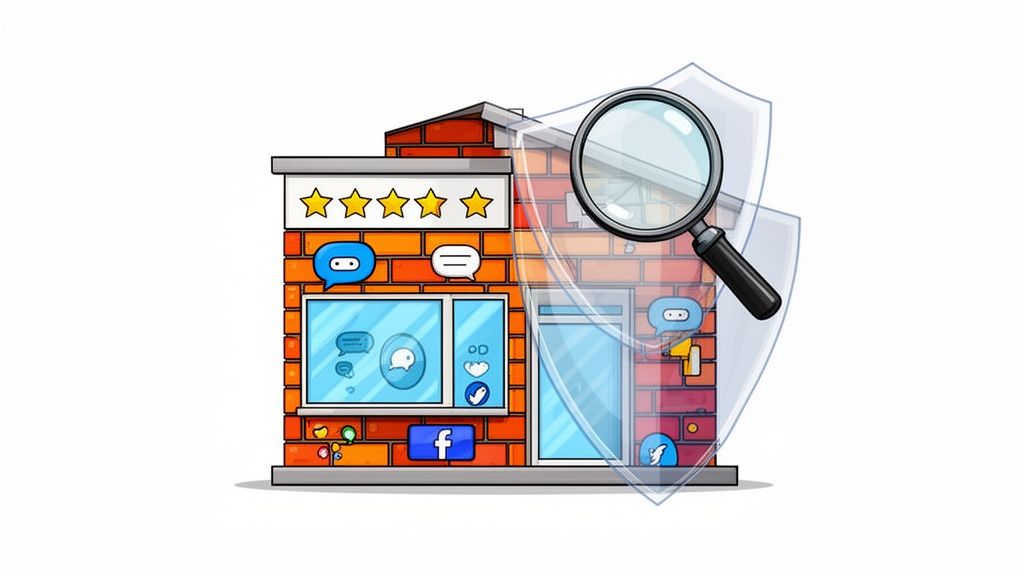
Sentiment analysis is more than just a listening tool; it’s a reputation safeguard. It helps brands spot shifts in public opinion, uncover new risks or advocates, and act fast based on what customers feel, not just what they say.

A Strategic Business Tool

Ultimately, the goal isn't just to hoard data. It's about turning all that online chatter into a real strategic advantage. To really get it, you have to see its role in a bigger social media online reputation management strategy. It’s all about protecting and building your brand’s image with actionable feedback straight from the source.

This process is a key part of the broader strategy we cover in our guide on what is social listening. When you understand the emotions driving conversations, you can sharpen your marketing messages, improve your customer service, and even steer product development. It’s about making smarter decisions based on what your audience genuinely thinks and feels.

How Sentiment Analysis Actually Works

Diagram illustrating rule-based, machine learning, deep learning progression leading to an emotion analysis wheel.

To really get how social media sentiment analysis turns a wall of online chatter into clear, actionable insights, it helps to look under the bonnet. This isn't magic; it's a journey through increasingly clever methods, each one designed to understand the quirks of human language a little better than the last.

It all started with a simple, dictionary-style approach. From there, it has grown into a sophisticated field capable of spotting emotional subtleties that even a human might miss in a quick scan.

The Foundation: Rule-Based Systems

The earliest flavour of sentiment analysis relied on rule-based systems. Think of this as a huge, carefully organised dictionary—or lexicon—where every word gets a sentiment score. "Brilliant" might get a +2 and "love" a +3, while "disappointed" scores a -2 and "awful" a solid -3.

The system simply scans a piece of text, adds up the scores, and delivers a final number. A positive total means a happy comment, a negative one means an unhappy one, and anything around zero is neutral. It’s straightforward, but this method gets easily confused by things like sarcasm or irony.

The Next Step: Machine Learning

To get past the limits of rigid rules, Machine Learning (ML) models came onto the scene. Instead of just following a dictionary, these models learn from being shown thousands of real-world examples that humans have already labelled. They teach themselves to spot the patterns that signal positive, negative, and neutral opinions.

An ML model learns that a phrase like "can't wait to buy another" is a strong sign of positive sentiment, even if the individual words aren't screaming with positivity. This makes it far better at understanding context.

A huge advantage of machine learning is its knack for getting the nuance. It can figure out that when someone says, "Great, another delay," they're probably not feeling great at all.

This ability to learn and adapt means the system gets smarter the more data it sees, making it a much more reliable choice for most real-world scenarios.

Going Deeper With Emotion Analysis

These days, the best sentiment analysis tools don't stop at a simple positive-negative-neutral scale. They push further into emotion analysis, identifying the specific feelings driving a conversation. This gives you a much richer, more useful layer of insight.

Knowing a customer is 'negative' is one thing. But knowing they're 'angry' versus 'sad' changes your entire game plan. Anger could signal an urgent customer service fire to put out, while sadness might point to a disappointing feature or a missed opportunity.

To classify these feelings, many advanced platforms lean on psychological frameworks. One of the most respected is Plutchik's Wheel of Emotions, which maps out eight primary emotions:

  • Joy
  • Trust
  • Fear
  • Surprise
  • Sadness
  • Disgust
  • Anger
  • Anticipation

This model doesn't just name the emotions; it shows how they relate and vary in strength. For example, 'annoyance' is a milder form of 'anger,' and combining 'joy' and 'trust' creates 'love.' Tools like ForumScout use this framework to give you a granular breakdown of what’s really driving the conversation about your brand. This lets you move from a vague idea of sentiment to a precise, empathetic response, turning raw feedback into a genuine competitive edge.

Sentiment Analysis Techniques At a Glance

To make it easier to see how these methods stack up, here’s a quick comparison. Each technique represents a step up in complexity and, generally, in the depth of understanding it can provide.

Technique How It Works Best For Limitation
Rule-Based Uses a predefined dictionary of words scored as positive, negative, or neutral. It tallies these scores to classify text. Quick, simple analysis where the language is straightforward and context is not critical. Easily confused by sarcasm, irony, and complex language. Requires constant manual updates to the dictionary.
Machine Learning (ML) Trains on a large dataset of pre-labelled examples to learn the patterns associated with different sentiments. Handling nuanced language and context. It's more adaptable and accurate than rule-based systems for most tasks. Requires a massive amount of high-quality, labelled training data, which can be expensive and time-consuming to create.
Emotion Analysis Goes beyond positive/negative to identify specific emotions like joy, anger, or sadness, often using psychological models. Gaining deep customer insight for targeted responses, such as urgent support for angry users or product feedback from sad ones. More computationally intensive and complex. The accuracy depends heavily on the quality of the underlying emotional framework.

Choosing the right technique depends entirely on your goal. For a quick pulse check, a simple system might do. But for truly understanding your audience and acting on their feedback, deeper methods like ML and emotion analysis are essential.

Why Sentiment Analysis Is a Competitive Advantage

Let’s be honest, understanding the mood of online chatter isn’t just an interesting data point anymore—it’s a cornerstone of growth. Social media sentiment analysis takes the raw, messy data from places like Reddit and X (formerly Twitter) and turns it into a clear roadmap for getting ahead. It’s the difference between reacting to whatever the market throws at you and actively shaping the conversation yourself.

This is especially true in crowded markets. When you start listening to what your customers feel, not just what they say, you gain an immediate edge over competitors stuck tracking basic mentions. It’s about hearing the actual conversation, not just the noise.

Proactively Manage Your Brand Reputation

Negative feedback happens. A full-blown crisis, however, is often preventable. Sentiment analysis is your early-warning system, flagging negative comments before they pick up steam. A single frustrated Reddit post can easily snowball into a viral headache, destroying brand trust that took years to build.

Real-time monitoring lets you catch these sparks before they become fires. When you can spot an angry or disappointed customer right away, your support team can jump in, solve the problem, and often turn a bad experience into a great one. This isn’t just firefighting; it shows you’re listening and you care, which is how real loyalty is built.

And the scale of this data is massive. In the UK alone, the social media analytics market hit USD 461.72 million and is expected to rocket to USD 2,764.48 million by 2033. That growth is fuelled by the sheer volume of conversations coming from 86.4% of the UK's internet users on platforms like YouTube and Facebook. You can dig deeper by exploring the full UK social media analytics market research.

Uncover Rich Product and Market Insights

Your customers are constantly telling you what they want, what they hate, and what they wish your products could do. Social media is a goldmine of unsolicited, brutally honest feedback. Sentiment analysis gives you a systematic way to dig for these invaluable insights.

Are people thrilled about a new feature? Frustrated with a bug? Hyped for an upcoming launch? Answering these questions helps you:

  • Prioritise your product roadmap: Put your development muscle behind features customers are genuinely excited for.
  • Find unmet needs: Spot the gaps in the market your competitors have completely missed.
  • Refine your offerings: Make improvements based on what real users are saying, not just what you think they want.

By looking at the emotional context, you move beyond simple feature requests. You start to understand the core problems your customers are trying to solve. That’s where true innovation begins.

Refine Marketing Campaigns for Maximum Impact

How can you be sure your latest marketing campaign is actually hitting the mark? Follower counts and likes only tell a sliver of the story. Sentiment analysis reveals the emotional response to your messaging. It tells you if your campaign is sparking joy, creating confusion, or just plain annoying people.

This insight allows you to be nimble. If the sentiment is overwhelmingly positive, you know you’ve struck gold and can double down. If it's neutral or negative, you can pivot your strategy in real-time instead of pouring more of your budget down the drain.

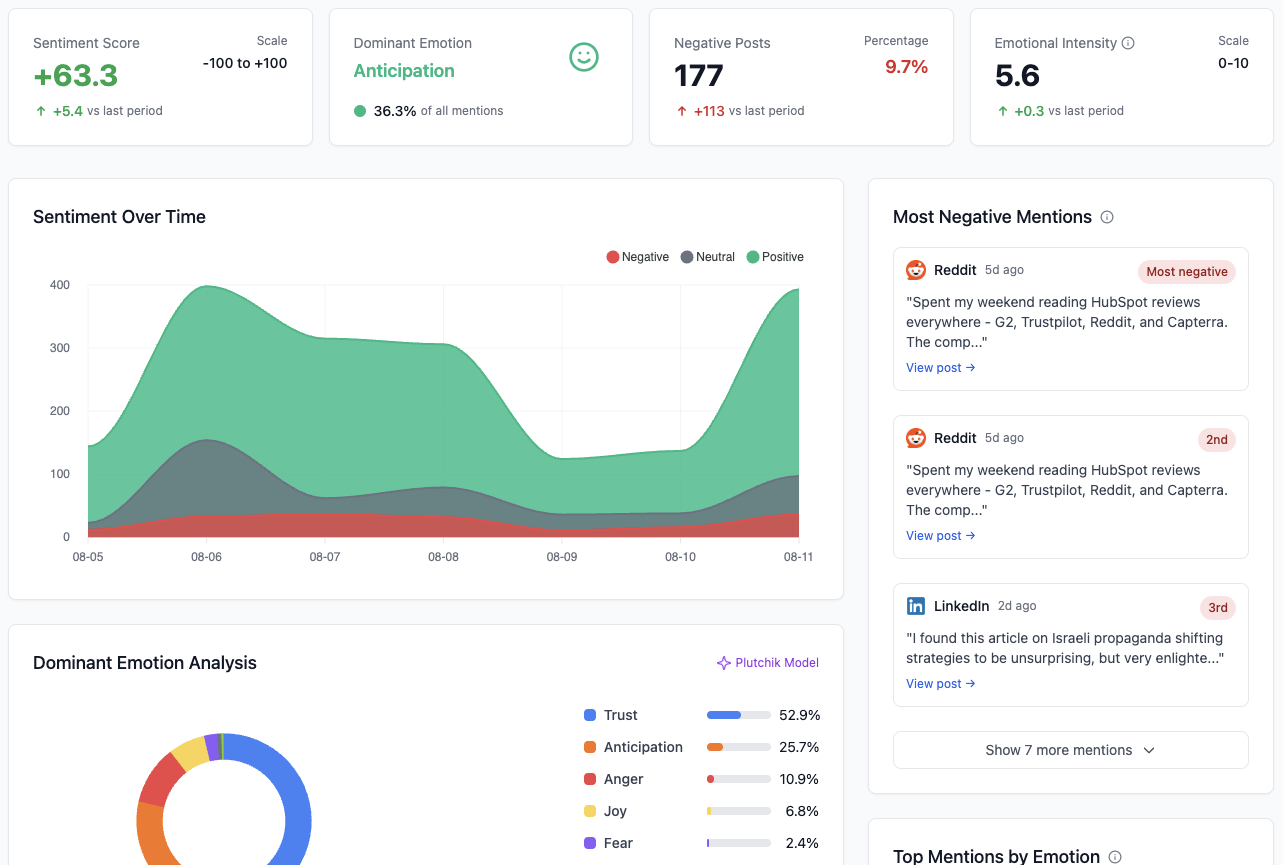
This screenshot from ForumScout's website shows how a good analytics dashboard can bring these insights to life.

The platform splits mentions by source and sentiment, giving you a clean, at-a-glance view of your brand’s health across different communities.

This kind of detailed breakdown helps you understand not just what people are saying, but where they're saying it. That’s how you tailor your engagement strategy for each platform. Ultimately, using social media sentiment analysis gives you a serious competitive advantage by turning audience feedback into measurable business growth.

Putting Sentiment Analysis Into Action

Four panels illustrating different aspects of social media sentiment analysis, including customer service, brand health, campaigns, and competitive intelligence.

Knowing the theory is one thing, but seeing sentiment analysis actually deliver results is where it all clicks. This isn't just about abstract data points; it’s about turning online chatter into a genuine business strategy. Think of it as a direct line into your audience’s unfiltered thoughts.

So, let's dive into four real-world scenarios where sentiment analysis really makes a difference. These examples show how you can turn online conversations into opportunities for growth, reputation management, and getting a leg up on the competition.

Proactive Customer Service

Imagine a customer is struggling with your new software. Instead of raising a support ticket, they vent their frustration in a niche Reddit community. Without sentiment analysis, that complaint could sit there, attract other unhappy users, and quietly chip away at your reputation.

But with the right monitoring setup, your system flags that post instantly. The negative sentiment, combined with keywords like "bug" or "won't load," triggers an alert. Your support team can then jump straight into the thread, offer a fix, and show the entire community that you’re listening and you care.

This kind of proactive approach is huge. It lets you:

  • Stop a crisis before it starts: You’re dealing with the problem at the source, long before it has a chance to go viral.
  • Build public trust: People see you actively solving problems, which builds massive confidence in your brand.
  • Cut down on support tickets: By solving an issue publicly, you’re also helping anyone else who runs into the same problem.

This is a cornerstone of smart online community management, something we dig into deeper in our guide to the monitoring of social media.

Brand Health Tracking

Launching a new product or a major rebrand can be a nerve-wracking experience. Is the public getting it? Is the message actually landing? Sentiment analysis gives you a real-time report card on how your brand is doing.

Picture a fashion brand dropping a new sustainable clothing line. By tracking keywords around the launch, they can see the emotional tone of the conversation. Are people excited, using words like "love" and "innovative"? Or are they sceptical, with negative comments driven by terms like "greenwashing" or "too expensive"?

Tracking sentiment over time lets you see how public perception shifts. You can spot the immediate impact of a press release, an influencer post, or a bad review, giving you the agility to tweak your strategy on the fly.

This constant feedback loop is essential. UK consumers are more vocal than ever, with 44% following brands to find new products. That’s fuelling a booming analytics sector, set to hit USD 2,485.9 million by 2030, as companies scramble to analyse what people are saying on platforms where they spend nearly two hours a day. You can discover more insights about UK social media stats on Birdeye.com.

Campaign Performance Insights

You've just launched a witty new ad campaign. The likes and shares are rolling in, but what’s the real story behind the numbers? Sentiment analysis digs past those surface-level metrics to show you the emotional impact of your work.

Let’s say a food delivery service runs a funny ad. It gets tons of engagement, but sentiment analysis shows a big chunk of the comments are tagged with "annoyance" or "confusion." The joke just isn't landing with a key demographic. That insight is gold. It tells the marketing team that while the ad is getting attention, it might be the wrong kind.

With that knowledge, they can quickly:

  1. Tweak the messaging for future ads.
  2. Adjust the targeting to reach an audience that gets the humour.
  3. Shape future creative briefs with data on what actually connects with people.

This elevates campaign measurement from counting vanity metrics to truly understanding your audience.

Powerful Competitive Intelligence

Your competitors' customers are an absolute goldmine of information. Their complaints, praises, and feature requests are all out there in public, just waiting to be analysed. Sentiment analysis lets you systematically uncover their weaknesses and spot your opportunities.

Say you run a project management software company. By monitoring your main competitor, you spot a recurring pattern of negative sentiment around their "clunky user interface" and "poor customer support." These aren't just complaints; they're strategic openings.

You can use this intelligence to:

  • Sharpen your marketing: Run campaigns that shout about your intuitive design and top-notch support.
  • Guide product development: Double down on making sure your own UI remains a key advantage.
  • Target their unhappy customers: Directly engage with users who are venting their frustration and offer your tool as a better alternative.

By analysing their sentiment, you’re essentially turning their customer feedback into your own strategic playbook. It lets you position your brand as the obvious solution to their biggest headaches.

How to Build Your Sentiment Analysis Strategy

A five-step process diagram illustrating a workflow: Goals, Keywords, Tools, Alerts, and Actions, connected by arrows.

Alright, you get what sentiment analysis is. Now, how do you actually use it? Moving from theory to practice takes a solid plan. A good strategy turns all that raw data into a real engine for growth, customer engagement, and protecting your brand’s reputation.

This isn't about collecting data just for the sake of it. It’s about building a structured process that gives you clear, repeatable results.

Let's break down how to build a social media sentiment analysis programme that works for your business, no matter its size.

Define Your Core Business Goals

Before you even think about tracking a single keyword, you need to know why. What business outcome are you actually trying to influence? A fuzzy goal like "understand customers better" just won't cut it. Your objectives have to be specific and measurable, otherwise, you're just flying blind.

Start by asking the right questions:

  • For brand health: Are we trying to measure our reputation against our top three competitors?
  • For customer support: Do we want to slash our response time to negative feedback by 50%?
  • For product development: What are the most common feature requests people are talking about online?

Getting your goals straight from the start will dictate which platforms you monitor, the keywords you track, and how you’ll know if you’re winning. Without this step, you’ll quickly find yourself drowning in data that doesn’t mean anything.

Choose Your Keywords and Platforms

Once you know your goals, the next step is figuring out what to listen for and where to listen. This goes way beyond just your brand name.

Your keyword list needs to be thorough:

  • Brand and product names: Don't forget common misspellings and abbreviations.
  • Key people: Track mentions of your CEO or other public-facing team members.
  • Campaign hashtags and slogans: See how people are reacting to your marketing efforts.
  • Competitor names: Keep a close eye on their reputation and what their customers complain about.

Knowing where to listen is just as important. In the UK, Gen Z is completely changing the game, spending a massive 49 hours and 29 minutes a month on TikTok. That’s more than double YouTube's 19 hours and 10 minutes and triple Facebook's 16 hours and 45 minutes. Video-first sentiment analysis is no longer a "nice-to-have".

With 71% of 18-24-year-olds on Reddit and 52% of all adults now getting their news from social media, focusing on community-driven platforms is non-negotiable.

Select the Right Tools for the Job

The right tool can make or break your entire strategy. You need something that doesn’t just collect mentions but gives you the analytical firepower to actually make sense of them. Modern tools like ForumScout are designed to handle this entire process from start to finish.

Look for features that make your life easier. Things like hourly updates ensure you never miss a conversation, and AI-powered filtering that lets you set rules in plain English is a game-changer. It cuts through the noise and shows you only the mentions that truly matter. Add advanced sentiment and emotion analysis on top, and you can finally understand the "why" behind the numbers.

A powerful tool doesn't just collect data; it delivers actionable intelligence. It should offer features like competitive analysis, audience insights, and smart alerts that notify you the moment a critical conversation happens.

Automate and Integrate Your Workflow

The final piece of the puzzle is turning all those insights into action. Doing this manually is slow, clunky, and just plain inefficient. To get the most out of your sentiment analysis, you need to build an automated insights engine. This is where integrations are crucial.

By connecting your monitoring tool to platforms like Zapier or Make using webhooks, you can create automated workflows that trigger actions based on sentiment. For instance:

  • Automatically ping any mention with strong negative sentiment to a dedicated Slack channel for your support team.
  • Log all positive mentions from influential accounts into a Google Sheet for your marketing team to track potential testimonials.
  • Create a new task in your project management tool whenever a feature request is spotted.

This kind of automation ensures the right insights get to the right people, instantly. Responding quickly to negative feedback is especially important, and having a plan is key. Our guide on how to respond to negative feedback offers practical steps for exactly these situations. Layering this with broader social media marketing best practices will only strengthen your strategy’s overall impact.

Common Questions About Sentiment Analysis

As you dive into social media sentiment analysis, it's normal to have a few questions. This stuff can seem pretty complex at first, but the core ideas are actually quite simple. Getting your head around the practical side of things, like how accurate it really is and whether it’s just for big companies, is key to feeling confident about using it.

So, let's tackle some of the most common questions to clear things up.

How Accurate Is Social Media Sentiment Analysis?

Honestly, it varies. You’ll see accuracy figures ranging from 70% to over 90%, but that number completely depends on the tool you're using. The more basic, rule-based systems often get tripped up. They can easily be confused by sarcasm, inside jokes, and industry slang that totally flips the meaning of a comment.

But the modern platforms are a different story. The ones using advanced AI and machine learning are far more reliable because they've been trained on massive amounts of data. This helps them pick up on the subtle context of how real people talk online.

The best tools, like ForumScout, don't just come with high accuracy out of the box—they actually learn and adapt over time. This means the insights you get become sharper and more tuned in to your specific audience and their unique lingo.

Can Sentiment Analysis Really Benefit a Small Business?

Absolutely. In fact, you could argue it's even more valuable for a small business. When every single customer relationship counts, sentiment analysis is a powerful equaliser. It gives you an affordable way to do some deep market research, keep an eye on your brand's reputation, and spot sales opportunities without needing a huge budget or a dedicated analytics team.

Think of it as having your finger on the pulse of your market, 24/7. Small businesses can use these insights to:

  • Engage potential customers by jumping into relevant conversations at just the right moment.
  • Find competitor weaknesses by seeing what their customers are complaining about in public.
  • Gather honest product feedback to guide your next feature or improvement.

Tools like ForumScout are built to be accessible, with cost-effective plans that let smaller teams punch above their weight by acting fast on what customers are saying.

What Is the Difference Between Sentiment and Emotion Analysis?

This is a great question, and the distinction is super important. Sentiment analysis gives you the big picture. It sorts online chatter into three main buckets: positive, negative, or neutral. It’s perfect for getting a quick, high-level read on the overall vibe around your brand.

Emotion analysis, on the other hand, digs a lot deeper. It’s about identifying the specific human feelings behind the words. It often uses psychological models like Plutchik's Wheel of Emotions to pinpoint feelings like joy, anger, sadness, or trust.

For example, sentiment analysis might just flag a comment as 'negative'. That’s useful, but emotion analysis tells you if that negativity is driven by 'anger' (a sign you have an urgent customer service fire to put out) or 'sadness' (which might highlight a disappointing product feature). That extra layer of detail lets you respond in a much more precise, empathetic, and effective way.


Ready to stop guessing what your customers think? ForumScout gives you the tools to monitor conversations across the web and turn sentiment into strategy. Start your free 7-day trial and uncover the insights you've been missing.