- 21 min read
Talkwalker vs Meltwater: A Clear, Unbiased Compare for 2025
Choosing between Talkwalker and Meltwater boils down to a pretty simple question of focus. Think of it this way: Talkwalker is a specialist's tool for deep consumer intelligence. It’s built for marketing teams who need to understand the why behind online conversations, using powerful AI analytics to get there.
On the other hand, Meltwater is an all-in-one media intelligence and PR suite. It's the perfect fit for communications teams managing everything from media relations to outreach and reputation management.
Talkwalker Vs Meltwater A Quick Verdict
So, which one is right for you? It’s less about which platform is "better" and more about understanding their fundamentally different strengths. One is a precision instrument for market research; the other is a versatile toolkit for public relations. Your team's main goal will steer you towards the right choice.
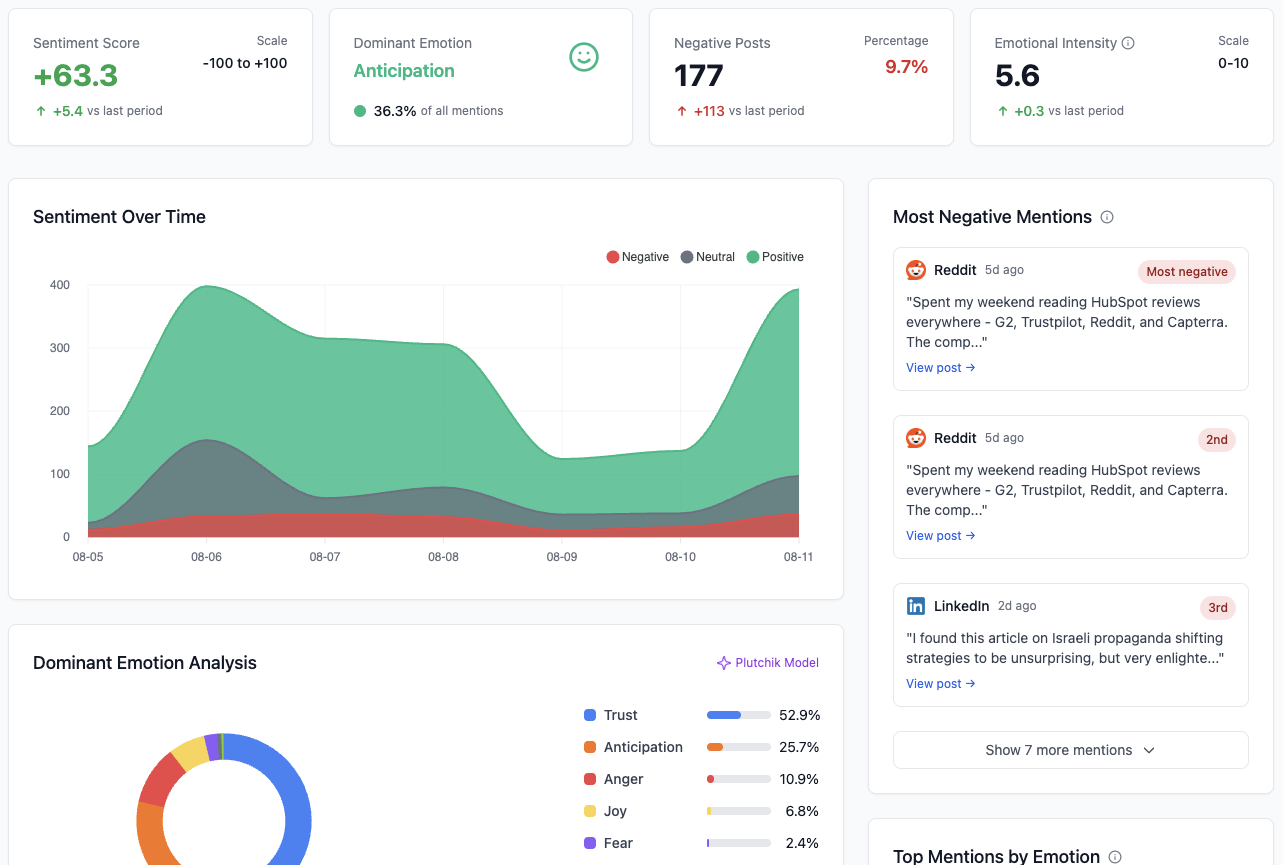
This graphic from Talkwalker's website says a lot about its philosophy.

It’s all about a data-centric workflow, connecting deep listening with actionable market insights. That’s the core of its value.
To give you a clear starting point for this Talkwalker vs Meltwater comparison, let’s break down where each platform really shines.
Core Strengths Talkwalker Vs Meltwater
This table breaks down the most critical differences between the two platforms, offering a quick reference for UK businesses weighing up their options.
| Feature | Talkwalker | Meltwater |
|---|---|---|
| Primary Use Case | Deep consumer intelligence, trend analysis, and market research. | Integrated PR workflow, media monitoring, and influencer outreach. |
| AI Capabilities | Advanced Blue Silk™ GPT for nuanced sentiment and trend forecasting. | Strong AI for news tracking, summarisation, and PR workflow automation. |
| Data Sources | Extensive coverage of 150M+ sources, including niche forums and blogs. | Broad coverage of news, podcasts, and social media with a PR focus. |
| Ideal Team | Marketing, insights, and competitive intelligence teams. | PR, corporate communications, and media relations departments. |
| Key Differentiator | Granular data accuracy and predictive analytics for strategic insights. | All-in-one suite for managing the entire communications lifecycle. |
The crucial distinction lies in their core purpose. Talkwalker is built to analyse and predict consumer behaviour with high-fidelity data, while Meltwater is designed to manage and measure media presence and brand reputation across a wide array of channels.
This initial comparison sets the stage for a deeper dive into their specific features, pricing, and real-world applications. As we explore further, you'll see how these foundational differences impact everything from data accuracy to daily usability.
Understanding Each Platform's Core Philosophy
To really get to the bottom of Talkwalker vs Meltwater, you have to look at where they came from. The history of each platform massively shapes what it’s good at today, leaving us with two very different tools for different jobs. They aren't interchangeable; one is a scalpel for digging into consumer insights, while the other is a Swiss Army knife for media relations.

This difference is everything. Picking the right platform means matching its core DNA to what your team actually needs to do.
Talkwalker: The Consumer Intelligence Engine
Talkwalker was built from day one as a consumer intelligence platform. Its main job is to get to the why behind online chatter, using some seriously powerful AI to analyse huge amounts of data. It’s brilliant at spotting trends, figuring out audience sentiment, and pulling insights from over 150 million sources – including the niche forums and blogs where people have real, unfiltered conversations.
Think of Talkwalker as a market research powerhouse. It’s made for marketing and insights teams who need super-detailed, accurate data to shape brand strategy, guide product development, or measure how a campaign landed. The focus is less on managing workflows and more on delivering crystal-clear analytics. Many businesses use advanced AI social listening tools just to get these kinds of deep market insights.
Meltwater: The Integrated Media Suite
Meltwater, on the other hand, started out in traditional media monitoring. Its original purpose was tracking news and press mentions for PR teams. It’s since grown into a massive media intelligence suite that pulls PR, social media management, and influencer outreach into one single, connected workflow. To get why this is a big deal, it helps to understand what social media management entails as part of a bigger communications plan.
At its heart, Meltwater is an all-in-one toolkit for comms professionals. Its strength is giving you one central place to manage brand reputation, find journalists, track media coverage, and run your social campaigns. The whole point is to make the entire communications cycle—from monitoring to outreach and reporting—run smoothly.
The core philosophies are clear: Talkwalker is built to analyse and predict consumer behaviour with unparalleled data depth. Meltwater is engineered to manage and measure media presence through an integrated workflow.
This distinction really matters in the UK market, where a few clever acquisitions have cemented Talkwalker’s dominance. By buying Nielsen’s Social business and then striking a deal with Hootsuite, it became the go-to listening engine. This lets it effectively track booming UK platforms like Reddit, which has 22.9M UK adult users, while its 90% sentiment accuracy across 187 languages gives you a much deeper understanding than Meltwater’s broader, news-first approach.
Diving Into Data Sources and Analytics
Let's move past the high-level sales pitches. The real difference between Talkwalker and Meltwater shows up when you get your hands dirty with their data engines and analytical tools. A platform’s actual value comes down to the quality of its data and how well it turns that raw information into clear, usable insights. This is where their priorities really diverge.

Think of it this way: one gives you a vast ocean of media coverage, while the other offers deep, clean wells of consumer conversation. Your choice really depends on whether you need to track your media footprint or truly understand what your audience is saying.
Data Coverage: Where Does The Information Come From?
The foundation of any listening tool is where it gets its data. Talkwalker and Meltwater have noticeably different approaches here, each shaped by their core philosophies.
Talkwalker casts an incredibly wide net, pulling information from over 150 million sources. This includes more than 30 social networks, countless blogs, forums, and news sites, and even print and broadcast media. Its biggest strength is its depth in crawling its own data, especially from forums and niche online communities where people have authentic conversations.
Meltwater, staying true to its PR roots, is a beast at traditional media monitoring. It covers an impressive 270,000 global news sources, along with TV, radio, and around 20,000 podcasts. While it also covers 15 major social channels, its focus is clearly on published media, making it a powerhouse for tracking press mentions and official brand stories.
The practical difference is huge. A UK marketing team trying to understand sentiment around a new product launch would get far more from Talkwalker’s ability to tap into Reddit threads and Mumsnet forums for unfiltered feedback. On the other hand, a comms team would find more value in Meltwater’s comprehensive tracking of how that same launch was covered by the BBC, The Guardian, and regional radio.
When it comes to the UK social media scene, Talkwalker has pulled ahead of Meltwater, especially in data comprehensiveness and AI-driven insights. Industry analysis shows Talkwalker monitoring over 30 social networks and 150 million web sources, including key UK platforms like Reddit, which has seen massive user growth. This gives it a clear edge in capturing real-time UK conversations, with its in-house crawling technology ensuring clean data from 187 languages—vital for a multicultural market.
Meltwater, while strong in broad media monitoring, often gets complaints about incomplete coverage and weak filtering, a point frequently raised by UK enterprise users on review sites.
The Power of AI and Filtering
Raw data is pretty much useless without the tools to refine it. Both platforms use AI and advanced filtering, but their sophistication and how they're applied are different, which directly impacts the quality of insights you’ll get.
Talkwalker’s AI, especially its proprietary Blue Silk™ GPT, is built for deep analysis. It drives features like predictive analytics and a nuanced sentiment analysis that can pick up on sarcasm and complex emotions. Its query builder uses powerful Boolean operators, allowing analysts to create incredibly specific searches that isolate conversations with surgical precision. This is crucial for cutting through the noise and making sure your data is clean.
Meltwater also has strong AI, but it's geared more towards summarisation and automating workflows for PR pros. It helps users quickly digest huge volumes of news coverage and manage media outreach. While it also has Boolean search, user feedback often points to difficulties in filtering out irrelevant mentions, leading to noisier data compared to Talkwalker. This isn't unique to Meltwater; as we covered in our Meltwater vs Brandwatch comparison, its competitor Brandwatch faces similar critiques.
Sentiment and Emotion Analysis
Understanding the feeling behind a mention is everything. Here, Talkwalker has a clear advantage in both depth and transparency.
Talkwalker's Approach: The platform claims up to 90% accuracy in its sentiment analysis across 192 languages. More importantly, it goes beyond simple positive/negative/neutral labels to identify seven distinct emotions, such as joy, anger, or disgust. This level of detail helps marketers understand the precise emotional reaction to a campaign.
Meltwater's Approach: Meltwater uses Google’s powerful BERT model for its sentiment analysis but doesn’t publicly share its accuracy rates. It delivers reliable positive/negative/neutral sentiment but lacks the deeper emotional analysis that Talkwalker offers. It's effective for teams that need a quick read on the general tone, but for those who need to understand nuanced customer feelings, it might not be enough.
This table breaks down the core differences in their analytical focus:
| Analytics Feature | Talkwalker | Meltwater |
|---|---|---|
| Primary AI Focus | Predictive insights and consumer intelligence. | Workflow automation and news summarisation. |
| Query Building | Advanced boolean for high-precision searches. | Boolean operators with a focus on media sources. |
| Sentiment Analysis | 90% accuracy with seven distinct emotion categories. | Positive/Negative/Neutral sentiment analysis. |
| Visualisations | Advanced visual analytics like Conversation Clusters. | Data-driven dashboards focused on media metrics. |
Dashboards and Integrations
Finally, how useful are these insights if you can't easily see them or connect them to other tools?
Talkwalker provides highly visual and customisable dashboards. Features like its Conversation Clusters and trend-spotting widgets are designed to make complex data immediately understandable for marketing strategists. Integrations are available, but often through connectors like Zapier, which might require a bit more setup.
Meltwater offers clean, data-heavy dashboards that are brilliant for PR reporting, focusing on metrics like media exposure and share of voice. Its real strength with integrations is connecting to Business Intelligence (BI) tools like Tableau and Power BI. This allows communications data to be blended with broader business metrics for those all-important executive-level reports.
Ultimately, the choice in the Talkwalker vs Meltwater debate comes down to what you need to analyse. If your goal is to uncover deep consumer insights, predict trends, and understand the emotional drivers behind what people say, Talkwalker’s sophisticated AI and granular data are superior. If you need to manage a comprehensive media relations strategy, track your brand's press footprint, and integrate that data into wider business reporting, Meltwater’s suite is built exactly for that job.
Diving into User Experience and Support Quality
A powerful platform is useless if your team finds it a nightmare to use or can't get help when something breaks. When you're comparing Talkwalker vs Meltwater, the day-to-day usability and the quality of customer support are just as vital as any flashy feature. This is where we stop talking theory and start looking at what it’s actually like to work with these tools.
For most businesses, it all starts with data accuracy. User reports often flag Meltwater for missed mentions or dashboards cluttered with irrelevant noise. In contrast, Talkwalker has built a solid reputation for delivering cleaner, more reliable data sets, which gives analysts far more confidence in the insights they’re pulling.
This gap in data quality usually comes down to the power of their underlying search and filtering capabilities, which has a massive knock-on effect on the entire user experience.
Navigating The Interface and Learning Curve
How a platform feels to use every day can make or break its adoption within your team. Both Talkwalker and Meltwater are complex enterprise tools, but they tackle usability from completely different angles.
Talkwalker’s interface is incredibly visual and designed to help you spot trends at a glance. Features like its Conversation Clusters turn complex data into an intuitive, map-like format, making it easy for strategists to see connections without needing a degree in data science. The trade-off? To truly unlock its precision, you need to invest serious time mastering its advanced Boolean query builder.
Meltwater, on the other hand, offers a clean, data-heavy dashboard that’s built for real-time monitoring and alert management, which PR professionals love. While the layout is logical, some users report a steep learning curve when trying to master its advanced features. Getting the most out of its detailed filtering options takes practice to avoid ending up with noisy or inaccurate results.
The core difference in user experience is clear: Talkwalker is built for deep, visual exploration of consumer data, which can feel more intuitive for strategists. Meltwater is organised around a PR workflow, which is efficient for comms teams but can be overwhelming for those unfamiliar with media monitoring metrics.
Comparing Customer Support And Onboarding
For UK businesses, getting timely, localised support is a massive factor in getting a return on such a significant investment. And this is where one of the biggest differences in the Talkwalker vs Meltwater debate really shows.
Meltwater provides a huge range of support resources, including a large help centre, 24/7 live chat, and dedicated account managers. That round-the-clock availability is a huge plus for global teams. However, the sheer scale of their operation can sometimes mean the experience feels less personal.
Talkwalker, on the other hand, is constantly praised for its high-quality onboarding and responsive, expert support. Their customer success teams are known for being proactive and genuinely knowledgeable, helping users get the most out of the platform's powerful features from day one. This hands-on approach is often the deciding factor for enterprises that need more than just a help desk.
User satisfaction metrics in the UK lean heavily in Talkwalker’s favour, driven largely by this superior onboarding and support. Its 5-star global support, available in local languages, really connects with UK businesses trying to get to grips with a complex platform. This is especially true when analysing niche communities like Reddit, where Talkwalker’s visual analytics and powerful AI make mapping trends much simpler. You can discover more insights about Meltwater's competitors on youscan.io and see how these factors play into user satisfaction.
Which Tool Is Right For Your Team?
Picking the right platform in the Talkwalker vs Meltwater debate isn't about which one has more features. It’s about matching the tool’s DNA to what your team actually does day-to-day. A world-class consumer intelligence engine is overkill for a team that just needs to track press releases, and a PR suite will only frustrate marketers hungry for deep audience insights.
So, let's break down how each platform stacks up for different business functions. By rooting the comparison in real-world scenarios, we can cut through the marketing fluff and focus on what truly matters: getting the job done.
For Marketing And Consumer Insights Teams
Marketing teams are on a mission to understand the customer, spot market trends, and prove campaign ROI. They operate in a world of analytics, needing clean, deep data to build their strategy.
Talkwalker is the clear winner here. Its entire platform is built to transform messy, unstructured online conversations into strategic gold.
- Campaign Tracking: Talkwalker's advanced sentiment and emotion analysis lets marketers see the real reaction to a campaign, moving way beyond simple mention counts. For instance, a UK brand launching a new sustainable product line could use it to analyse Mumsnet and Reddit threads, figuring out if the messaging connects emotionally or is just being met with cynicism.
- Consumer Intelligence: It pulls data from over 150 million sources, including those niche blogs and forums where people give their unfiltered opinions. This is perfect for product teams trying to identify unmet needs or pain points that never show up on mainstream social feeds.
- Trend Identification: The platform’s predictive analytics and visual tools, like its Conversation Clusters, are designed to help strategists spot emerging trends before they hit the mainstream. That’s a massive competitive advantage.
For marketers, Talkwalker is less of a tool and more of a strategic compass. It provides the deep, nuanced data needed to navigate the tangled web of consumer behaviour and market shifts. It’s built for discovery.
For PR And Communications Teams
PR and comms departments live and breathe media relations, reputation management, and crisis control. Their world demands an integrated workflow for monitoring coverage, connecting with journalists, and reporting on the brand’s health.
Meltwater was purpose-built for this job. It shines as an all-in-one command centre for managing the entire communications lifecycle.
- Crisis Management: With massive monitoring capabilities across 270,000+ news sources, plus TV and radio, comms teams get real-time alerts on breaking stories. This lets them jump on a negative narrative and manage it before it spirals out of control.
- Media Relations: Meltwater’s built-in database of journalists and influencers is a huge time-saver for outreach. A PR manager can find the right reporters, send out a press release, and track its pickup, all without leaving the platform.
- Brand Reputation: Its dashboards are geared towards reporting on core PR metrics like share of voice, media exposure, and sentiment in the press. This makes it incredibly easy to show the value of PR work to stakeholders. For a closer look at platforms that excel here, our guide on the best Talkwalker alternatives is worth a read.
In the end, it really comes down to your team’s core function. If your mission is to uncover deep market truths and truly understand your audience, Talkwalker is the superior choice. But if you need to manage and measure your brand’s public reputation efficiently, Meltwater’s integrated suite is the more practical tool for the job.
Making Your Final Decision
Right, after digging deep into the features, philosophies, and real-world uses of Talkwalker and Meltwater, the final choice comes down to one thing: what is your team’s core mission? This isn't about which platform is "better" in a vacuum. It's a strategic call to align a powerful tool with your specific business goals.
One tool is a precision instrument for understanding why customers behave the way they do. The other is a comprehensive command centre for managing how the world sees your brand.

To make this complex choice a bit simpler, we've boiled down all the key takeaways into a clear verdict. Use this guidance and the checklist below to map each platform's strengths directly to your team's day-to-day needs.
The Verdict: Talkwalker vs Meltwater
The bottom line is pretty straightforward. Talkwalker is the superior choice for deep consumer intelligence and data-led marketing insights. Its powerful AI, incredible data coverage across niche online communities, and nuanced sentiment analysis make it the perfect tool for teams focused on market research, spotting trends, and truly understanding the why behind online conversations.
On the other hand, Meltwater excels in integrated PR and media monitoring workflows. Its strength is its all-in-one suite that pulls together traditional media tracking, social media management, and influencer outreach. It's the ideal fit for communications and PR departments that need to manage brand reputation, run media campaigns, and report on press coverage without juggling multiple tools.
The decision really boils down to this: Choose Talkwalker if your primary goal is to uncover strategic market insights. Choose Meltwater if your primary goal is to manage and measure your brand’s public-facing communications.
Your Decision-Making Checklist
To help you make a confident choice, run through these questions. The more you answer "yes" to one column, the clearer your decision will be.
| Your Priority | Talkwalker | Meltwater |
|---|---|---|
| Is understanding nuanced customer emotions critical? | âś… | |
| Is your main goal to manage media relations and press coverage? | âś… | |
| Do you need to analyse conversations on niche forums like Reddit? | âś… | |
| Is an integrated workflow for PR and influencer outreach essential? | âś… | |
| Is predictive analytics for trend-spotting a key requirement? | âś… | |
| Do you need to track coverage across TV, radio, and podcasts? | âś… | |
| Is high-fidelity data for market research your top priority? | âś… |
If you want to get better at evaluating marketing tools in general, it's worth exploring other in-depth analyses like this comparison of Semrush vs Ahrefs for keyword research.
Considering A Cost-Effective Alternative
Let's be honest, the enterprise-level price tags on both Talkwalker and Meltwater can be a serious hurdle, especially for small to medium-sized businesses. If your core need is to monitor online communities and forums for brand mentions, customer feedback, or sales opportunities, a more specialised and affordable tool might be a much better fit.
This is where a platform like ForumScout comes into the picture. It's designed specifically for deep monitoring of Reddit, forums, and other community-driven platforms. It offers a powerful, budget-friendly solution for businesses that want to tap into unfiltered customer conversations without the enterprise cost.
- Niche Focus: Unlike the broad scope of Talkwalker and Meltwater, ForumScout zeroes in on the platforms where authentic discussions happen, giving you a clearer signal from high-value communities.
- Affordability: With plans starting at a fraction of the cost of enterprise tools, it opens up critical social listening capabilities for teams on a tighter budget.
- Actionable Insights: It delivers sentiment analysis, competitor tracking, and smart notifications, helping you find leads and engage with your audience much faster.
For a team focused on community engagement or generating leads from online discussions, ForumScout can work as a powerful primary tool or as the perfect complement to a broader media monitoring suite. It's proof that you don't always need the biggest platform to get the most valuable insights.
Frequently Asked Questions
Even with a side-by-side comparison, some practical questions always come up when you’re this close to making a decision. Here are the most common things people ask when weighing up Talkwalker and Meltwater.
Which Platform Is More Expensive?
This is the million-dollar question, literally. Both Talkwalker and Meltwater keep their pricing under wraps, operating on a custom quote model. The final figure depends on what you need—how much data you’re pulling, how many users need access, and which specific features are on your wishlist.
Both are definitely premium, enterprise-level tools with annual contracts. From what we've seen and heard from users, Talkwalker often ends up being the pricier of the two, particularly when you start tapping into its heavy-duty AI and consumer intelligence features. Meltwater’s tiered plans (Essentials, Suite, Enterprise) might give you a slightly more scalable entry point, but don’t fool yourself—you’ll need a significant budget for either.
Do Talkwalker Or Meltwater Offer A Free Trial?
Nope. Neither platform offers a free trial, and that’s pretty standard for software at this level. The setup and onboarding process is just too involved for a self-serve trial to make sense.
What they do instead is push for a personalised demo. This is their chance to show you the parts of the platform that actually solve your problems and put together a custom package that fits what you’re trying to do. It’s less of a trial and more of a guided tour.
Which Is Better For A Small Business?
Honestly, neither. For most small businesses, both platforms are overkill and will burn through your budget in no time. They’re built for the big leagues—think global brands tracking conversations across dozens of markets or running complex consumer research projects.
If you’re a small business or a startup, you’ll get far more bang for your buck with a tool that’s more focused. If your main goal is to keep an eye on brand mentions and dig up leads on places like Reddit or other online communities, a specialised tool will give you a much better return.
For businesses that need powerful community listening without the enterprise price tag, ForumScout offers a smart alternative. Start your free 7-day trial and discover actionable insights today.